

14 min read
In this article
- Drainage and sewerage approval in short
- What "drainage approval" means for a villa, annex or majlis
- Connecting to the public sewer: what the rules say
- The Building Code side: the final inspection chamber
- Connecting a new annex or majlis to an existing villa's drainage
- Where there is no public sewer: septic and holding tanks
- Rainwater and stormwater
- Inspection and testing of drainage works
- How drainage fits the permit and the completion certificate
- Checklist: drainage before completion
- How Al Mustafa Contracting handles it
- Frequently asked questions
- Do I need Dubai Municipality approval to connect my villa or annex to the sewer?
- How early should I apply for the connection?
- Is there a temporary sewer connection during construction?
- What if my plot has no public sewer?
- Can rainwater go into the sewer?
- Can pool water go into a septic tank?
- Are drainage works inspected?
- What does the connection cost?
- Need help with drainage and approvals?
- Official sources
Before a villa, annex or majlis can be handed over in Dubai, its wastewater has to go somewhere approved: either into the public sewer through a connection that Dubai Municipality has authorised, or, where there is no sewer yet, into a tank built to the Dubai Building Code. Rainwater has its own separate rules and must never be mixed with foul water. This guide explains, from official Dubai sources, what the connection approval is, what applies where there is no sewer, how rainwater is handled, how drainage works are tested, and how all of it fits the building permit and the completion certificate.
Drainage and sewerage approval in short
- Dubai Municipality (DM) lists "Connect to Sewerage Networks" as a service for buildings, homes and construction projects, with permanent and temporary connections. A temporary connection is available for projects still under construction.
- Under Local Order No. 8 of 2002, nobody may connect a building's private sewer to the public sewer without prior approval, and the approval application is to be filed at least three months before the scheduled completion date. The Municipality decides the number and place of the connection points from the owner's plans.
- Where there is no public sewer, the Dubai Building Code requires a sewage holding tank (and, for villas, a septic tank in the way Part K describes), with the tank location approved by the Authority and a design that allows a later connection to the public network.
- Rainwater is kept apart from the sewer. Roof rainwater pipes are not connected to sewer lines, and wastewater is not discharged into the rainwater network.
- All drainage must be tested and the test certificates submitted for review. The connection then sits inside the same chain as the building permit, the inspections and the completion certificate.
What "drainage approval" means for a villa, annex or majlis
There is no single document called "the drainage approval". In practice three different things are involved, and your engineer should tell you which apply to your plot:
- The design approval. The sanitary and drainage drawings are part of the drawing set that goes in with the building permit. The Building Code expects tank locations, where tanks are needed, to be shown on the sanitation, architectural and construction drawings and approved by the Authority.
- The connection approval. This is the permission to join your private network to the public sewer, which Local Order No. 8 of 2002 requires before any connection is made.
- An NOC where works are close to existing lines. DM offers a no-objection certificate for construction projects close to sewerage and stormwater networks, so that your works do not interfere with the existing drainage. DM states a target of within 7 days.
The DM services page we read names these services but does not publish a document list for them. Ask the licensed engineering office or contractor to confirm in the system what your request needs, rather than relying on a generic list. For the permit itself, see our guide to the Dubai building permit for a villa annex.
Connecting to the public sewer: what the rules say
Local Order No. 8 of 2002 (sewerage, irrigation and water) is the main legal text. Its points that matter to an owner building a villa, annex or majlis:
- Prior approval (Art. 4): no person may connect a building's private sewerage network to the public network, or alter public sewer lines, without first obtaining approval from the competent DM department.
- Timing (Art. 4): the connection application is to be submitted at least three months before the building's scheduled completion date.
- Connection points (Art. 5): the Municipality sets the number and locations of connection points to the public sewer and to the rainwater network, based on the plans the owner submits. A change later needs a new application.
- Owner's responsibility (Art. 23): the owner operates and maintains the private network and clears blockages, overflows and leaks.
- Air-conditioning and balcony drainage (Arts. 9 and 33): these pipes are connected to the building's private sewer, not to the rainwater network.
The text we read is the English translation on the Dubai Legislation Portal, which states that the Arabic text prevails, and the portal page does not show whether the order has since been amended. Your consultant should confirm the current version and any DM schedule that applies.
The Building Code side: the final inspection chamber
For villas, Part K of the Dubai Building Code asks for a final inspection chamber (FIC) near the compound wall, opposite the public drainage connecting chamber or manhole. It has one incoming connection and works by gravity. Even where there is no public drainage yet, the FIC is still provided so the building can connect to a future network. This is the point where your private network ends and the Municipality's begins, so the contractor should set it out carefully and keep it accessible.
Connecting a new annex or majlis to an existing villa's drainage
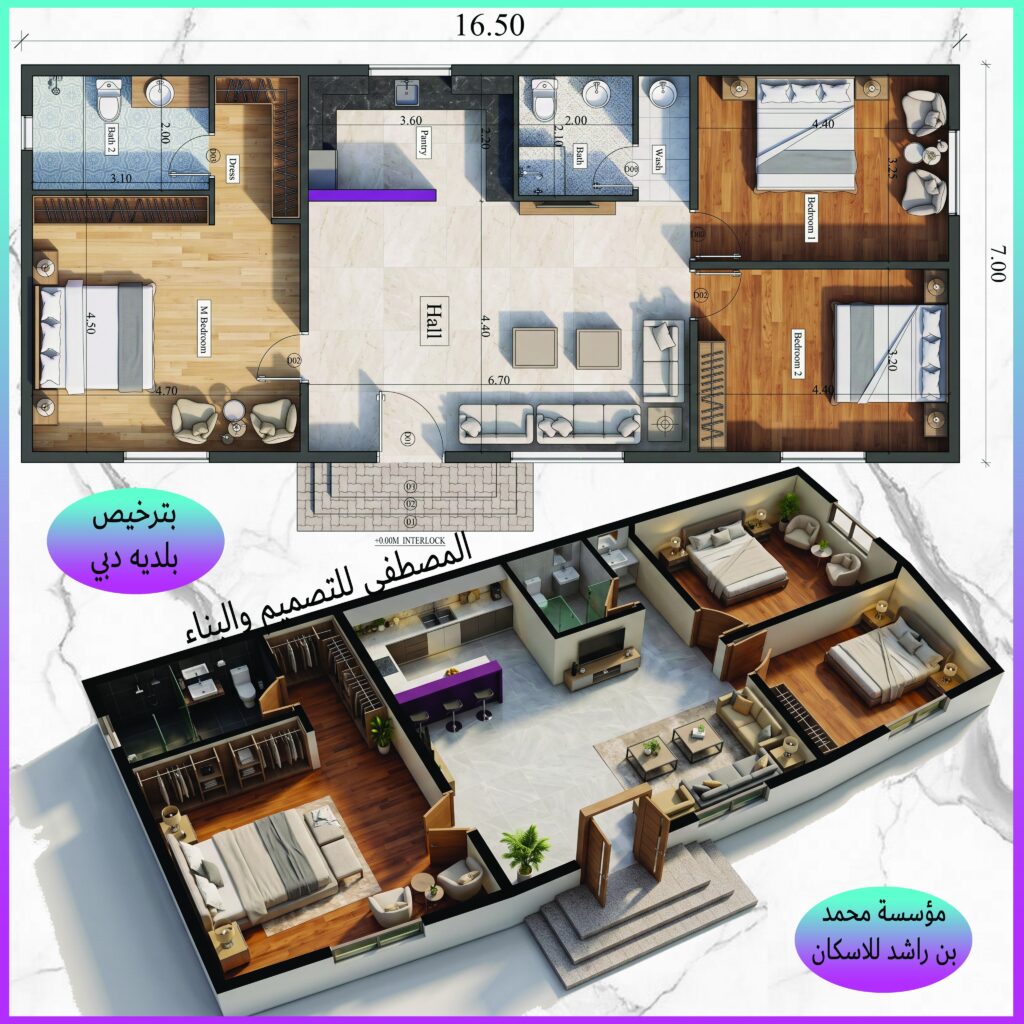
A new annex or majlis on a plot that already has a villa is usually served through the plot's existing private network and its connection to the public sewer. We did not find an official DM page that sets a separate rule for this case, so treat the following as questions for your engineer rather than as rulings:
- Do the added fittings, kitchenette or bathrooms change the load, so that the Municipality should see the updated plans?
- Does the new building change the connection points on the plot, which under Article 5 would mean a new application?
- Will the new works cross or sit close to a public sewer or stormwater line, which is the case the DM NOC exists for?
For the wider rules on what you may build, see our Dubai Building Code guide for villas and annexes and our guide to building a majlis, villa or annex.
Where there is no public sewer: septic and holding tanks
Some areas of Dubai are still waiting for a public sewer, and DM keeps extending the network; its report on connecting Nad Al Sheba 3 describes new sewers and household connections for homes and other properties there. Where the network has not arrived, the Building Code sets what the plot must have. Part K (villas) says that where there is no public drainage network available, the building shall be provided with a sewage holding tank and septic tank, and that the tanks must meet these requirements, among others:
- They sit inside the plot boundary, are easy to reach for cleaning and emptying, are shown on the drawings, and their location is approved by the Authority.
- They can be connected in future to the public drainage network, with the manhole used for the future connection prepared for it.
- Swimming pool water is not drained into a septic tank.
- Minimum distances apply to nearby buildings, boundary walls and underground water tanks, and tanks stay out of the vehicle access set-back unless that cannot be avoided, in which case the construction is made strong enough for fire tenders and heavy vehicles.
- Tanks have a heavy-duty lockable cover, a ventilation pipe, insect-proof openings and a pumping-out (breaching) pipe, and a holding tank has a high-level alarm with a visual and audible signal.
Part H of the same code, which covers buildings generally, is worded differently: it says a building without a public network is provided with a sewage holding tank, and that septic tanks are used only for remote locations with low foul water flow. Because the two parts differ, ask your consultant which one governs your building and what tank size and type DM will accept on your plot.
Because tanks are emptied by pumping out, tanker access matters. DM lists a "Withdraw Sewage" service for sites not connected to the public network, and a separate service for registering sewage tankers, which is for operators rather than owners. Local Order No. 8 of 2002 allows tanker loads from septic tanks and cesspools into the public network only at designated discharge points. Check the current DM service page for how an owner books a collection.
Rainwater and stormwater
Dubai keeps rainwater and foul water in separate systems, and the rules are strict about not mixing them.
- Owner's duty (Local Order Art. 32): provide a working system to drain rainwater from the building and its parking area.
- No water into the sewer, no sewage into the rainwater network (Art. 26): water may not be discharged into the public or private sewer, except to the rainwater network with written approval, and wastewater may not be discharged into the rainwater network.
- Diverting rainwater pipes (Art. 34): changing or diverting a building's rainwater pipelines needs the Municipality's written approval.
- Roofs and paving (Building Code, Part K): a rainwater system is provided for all roof areas; rainwater pipes are not connected to sewer lines and discharge above ground; rainwater is not drained into septic tank or cesspit pipes or into a neighbour's property; and where possible it is drained within the plot at least 2 m from the building. Paved areas are drained by gullies and channels designed to intercept sand and dust.
- No public rainwater network: Part K prefers a storm drain within the plot able to hold rainwater for at least one day; Part H says a storm drain or holding tank should be provided.
- Soakaways: where used, they take surface water only, stay at least 3 m from a footing or boundary wall and at least 1 m from a septic or holding tank, with the base at least 1 m above the winter water table.
During building, dewatering an excavation into the rainwater network needs a written permit under Article 27 of the Local Order, and DM lists a land drainage and dewatering permit service with a target of within one working day. Your contractor handles that; it matters because pumping groundwater into the wrong system is a violation. For the safety side of the site, see our site safety guide.
Inspection and testing of drainage works
The Building Code (Part H, clause H.6.9) says all drainage systems are tested with air or water to show they have no defects, that tests are done as soon as practicable after installation, and that interim and final test certificates are submitted to the Authority for review and approval, in an agreed format that records the site, system, type of test, witnesses, signatures and dates. For below-ground drains the code points to the BS EN 1610 method unless the Authority asks for more. We read this clause in Part H, the general part, so ask your consultant how it is applied to a villa.
In practice: test the drains before they are covered and keep the certificate. The foundation and structural audit inspections described in our guide to Dubai Municipality inspections and the completion certificate are separate from drainage tests, but they happen on the same site, so the order of work matters.
How drainage fits the permit and the completion certificate
DM describes the building process as three steps: the building permit, the structural audit inspection (which includes foundations), and the completion inspection with service connection. Drainage threads through all three:
- Permit stage: sanitary drawings, tank locations (if any) and rainwater arrangements are part of the design your engineer submits.
- Construction stage: drains are laid, the final inspection chamber is built, tests are carried out and certificates kept.
- Completion stage: the sewer connection belongs to the "service connection" part of the completion step, so it should be requested and approved before you expect the completion certificate. Because Local Order No. 8 asks for the application at least three months before the scheduled completion date, start the request well before the last weeks of work, and ask your engineer how it is sequenced in the current DM system.
If a building has already been used without these approvals, the route is different: see how to license an existing annex. Some plots belong to free zones or private development zones with their own authority; confirm which authority governs yours before assuming DM rules apply.
Checklist: drainage before completion
- You know whether a public sewer serves the plot or whether it needs a holding or septic tank.
- The connection request to DM was started at least three months before the planned completion date.
- The NOC for works near sewerage or stormwater lines is obtained if the works are close to public lines.
- The final inspection chamber is built near the compound wall, opposite the public chamber, accessible and with its cover correctly rated.
- Tanks, if any: location approved, inside the plot, vented, alarmed (holding tank) and reachable by tanker.
- Rainwater pipes are not tied into the sewer, and air-conditioning condensate goes to the private sewer.
- Drain test certificates (interim and final) are on file and ready for the Authority.
How Al Mustafa Contracting handles it
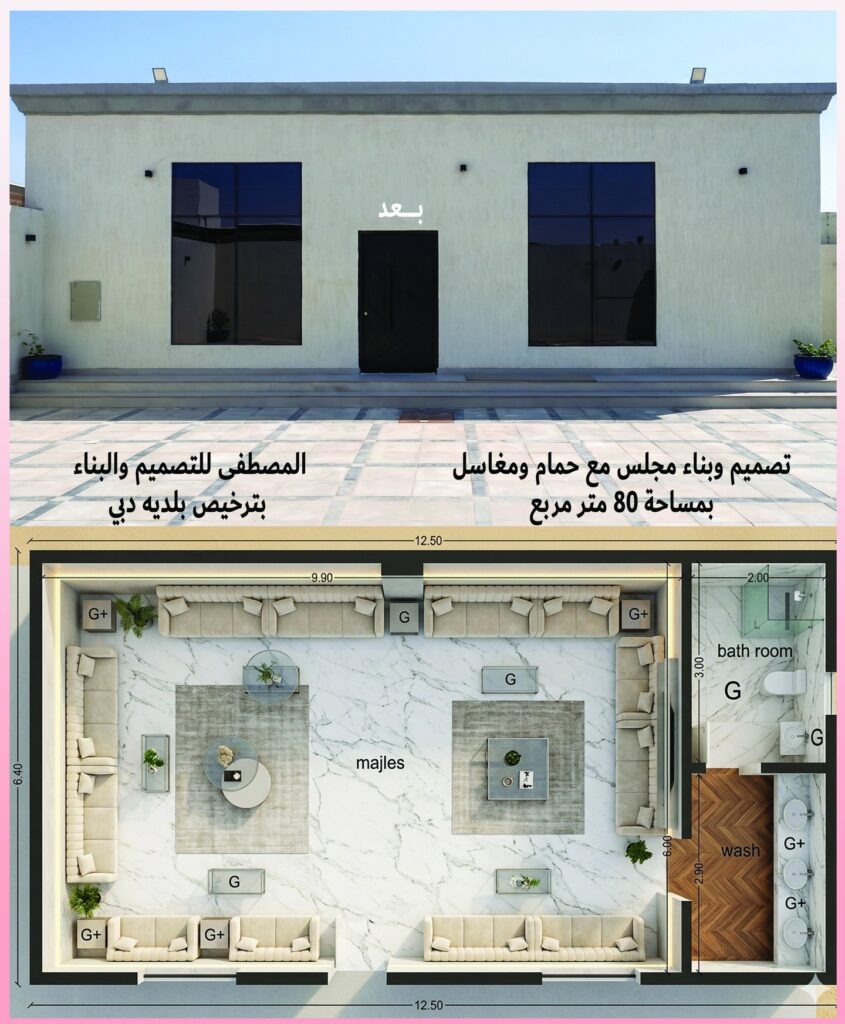
We treat drainage as part of the plan from the first drawing. We ask which connection serves the plot, set out the final inspection chamber and levels from the approved drawings, keep rainwater and foul pipework apart, test the drains before they are covered and keep the certificates for the file. If a tank is needed, we locate it with access for the tanker in mind. We coordinate with your licensed engineering office on what the Municipality needs, and we start the connection request early so that it does not hold up the completion inspection. See our villa building requirements guide for the wider design rules.
Frequently asked questions
Do I need Dubai Municipality approval to connect my villa or annex to the sewer?
Yes. Local Order No. 8 of 2002 prohibits connecting a building's private sewer to the public sewer without prior approval from the competent DM department, and DM offers a "Connect to Sewerage Networks" service for this.
How early should I apply for the connection?
The Local Order says the application is to be submitted at least three months before the building's scheduled completion date. Your engineer will confirm how this is handled in the current DM process.
Is there a temporary sewer connection during construction?
DM's service description includes temporary connections for projects under construction. Ask your contractor whether your site needs one.
What if my plot has no public sewer?
The Dubai Building Code requires a sewage holding tank (and, for villas in Part K, a septic tank) inside the plot, with its location approved by the Authority and the ability to connect to the public network later. DM lists a sewage withdrawal service for sites not connected.
Can rainwater go into the sewer?
No. Local Order No. 8 of 2002 prohibits discharging water into the sewer, and the Building Code says roof rainwater pipes are not connected to sewer lines. Wastewater likewise must not go into the rainwater network.
Can pool water go into a septic tank?
No, the Building Code says swimming pool water is not drained into a septic tank.
Are drainage works inspected?
The Building Code requires drainage systems to be tested and the interim and final test certificates submitted to the Authority. The structural inspections and completion inspection are separate DM steps on the same site.
What does the connection cost?
Official fees are set by Dubai Municipality and shown when you request the service, so we do not quote figures.
Need help with drainage and approvals?
We are happy to look at your plot and explain what the drainage and permit path looks like. Message us on WhatsApp or use the contact page.
This article summarises official Dubai documents for owners. The official DM website and the current versions of the documents prevail, and your licensed engineer confirms what applies to your plot.
Official sources
- Dubai Municipality services page: "Connect to Sewerage Networks", "NOC for Construction Projects Close to Sewerage and Stormwater Networks", "Approval to Divert or Disconnect Sewerage or Stormwater Lines", "Withdraw Sewage", "Register Sewage Tankers" and the dewatering permit
- Local Order No. (8) of 2002 concerning sewerage, irrigation and water, Dubai Legislation Portal (English translation)
- Dubai Building Code, 2021 Edition: Part K (Villas) clauses K.10.3.3.1, K.10.3.3.6, K.10.3.4, K.10.3.6 and K.10.3.7, and Part H clauses H.6.4, H.6.9 and H.6.10
- Dubai Municipality: Nad Al Sheba 3 connected to the main sewerage and drainage network
Planning your next project?
Talk to the Al Mustafa team for advice and a quotation for your project in the UAE.
Related articles
 23 November 2026Which authority issues the building permit for a villa in Dubai, and which NOCs you needRead article
 23 November 2026Dubai Civil Defence approval for a villa, annex or majlis: when it applies and how it fits the permitRead article23 November 2026Demolition permit in Dubai for a villa, annex or majlis: who applies and what happens nextRead article