

13 min read
In this article
- In short
- Dubai construction site safety rules: what they are and who they apply to
- The site set-up at a glance
- Construction site safety before work starts in Dubai
- Site hoarding in Dubai: fence, gates, guarding and signs
- Fence and gate
- Guarding and cameras
- Signs and lights
- Where workers stay
- Excavation and scaffolding safety requirements
- Excavation
- Scaffolding
- Fire safety on site
- Neighbours, noise and dust
- Construction site safety checklist: what a professional contractor sets up for you
- Frequently asked questions
- What are the construction site safety requirements in Dubai?
- Do the construction site safety rules apply to a small villa annex or majlis?
- How high must the site hoarding or fence be in Dubai?
- Is the Dubai Municipality Safety Guide for construction works mandatory?
- Can work continue at night?
- Can workers sleep on the site?
- What if building works damage my neighbour's wall?
- Who do I call in an emergency on a site?
- Official sources
Construction site safety in Dubai is no longer just good practice: under Decree No. (19) of 2025 the Dubai Municipality (DM) Safety Guide is binding on every contractor and engineering office working in the emirate. If you are building a villa annex or majlis while your family lives next door, this guide explains in plain language what a properly run site looks like: fencing, signs, guarding, scaffolding, excavation, fire safety, noise and care for your neighbours.
In short
- Decree No. (19) of 2025 makes the DM Safety Guide mandatory for all contractors and engineering offices, and it replaces the older administrative decision (51) of 2008.
- A professional site is fenced (at least 2 m high), guarded, lit, signed in Arabic and English, and kept clean within 30 m around it.
- Excavation over 1.20 m deep needs support, scaffolding above 1.8 m needs a competent person and inspection, and fire and hot-work rules apply even on a small site.
- Night work (8 pm to 6 am) needs a permit, and your neighbours should be told before noisy work starts.
- Good construction site safety is part of a good project: ask your contractor to show you the safety plan and the site set-up before work begins.
Dubai construction site safety rules: what they are and who they apply to
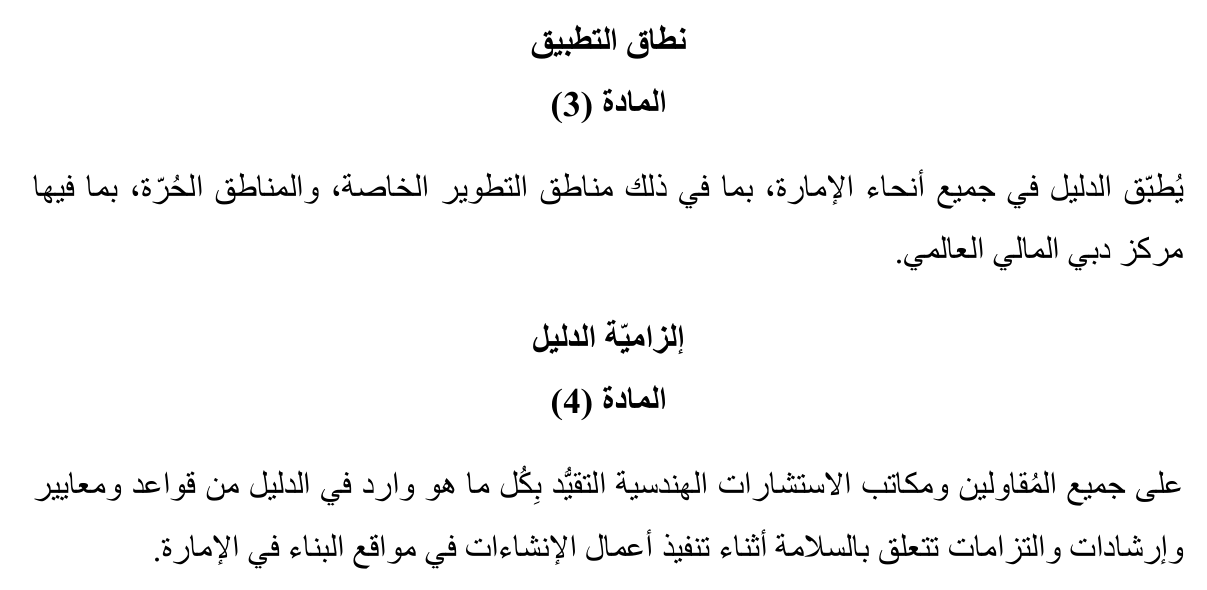
Decree No. (19) of 2025 on safety in construction works in the Emirate of Dubai applies across the emirate, including free zones and special development zones. It obliges all contractors and engineering offices to follow everything in the DM Safety Guide while works are carried out on site. It cancels administrative decision (51) of 2008, which previously approved the safety practice guide. The decree was published in the Official Gazette on 3 May 2025 and takes effect three months after publication. Together, the decree and the Guide are the basis of construction site safety in Dubai. Penalties are set by a separate decision of the Chair of the Executive Council; our guide to building violations and fines gives the wider picture.

Some areas are supervised by other authorities, such as free zones or master developers, and they may have their own site procedures alongside the Guide. If your plot is in such an area, ask the developer or authority which site rules and permits apply before work starts.
Alongside the Guide, Dubai Municipality construction safety rules include DM circulars on construction sites that cover fences, guarding, worker facilities and building inside the plot line. They are listed under official sources at the end.
The site set-up at a glance
Construction site safety before work starts in Dubai
- Safety plan and risk assessment. The Guide requires the contractor to prepare a safety plan and a documented risk assessment for the works and keep a copy on site.
- Condition of the neighbouring walls. The Guide asks for the condition of adjoining buildings and boundary walls to be checked and any cracks recorded before work starts, so that any later damage can be reported and dealt with fairly.
- Safety staff. The Guide sets minimum safety staff by contractor class and by number of workers per shift. The smallest contractor class (ground plus one floor) needs a safety inspector, and a site with fewer than 50 workers per shift needs a safety inspector on a part-time basis.
- Engineering office role. In small projects such as an annex or majlis, a supervising consultant is not mandatory during execution, but a consultant or engineering office may take part in the design and permit stage. Where the Guide says the engineering office approves an item, such as the site layout or a scaffold design, agree at the start who signs it for your project.
Work itself starts after the permit, and the DM inspections apply at set stages: the DM engineer inspects before the foundations are poured and pouring waits for approval, and the same applies before a concrete roof slab is poured. A sandwich-panel roof has no pour, so the pre-pour slab inspection does not apply to it. Read more in our guides to the building permit and the DM inspections and completion certificate.
Site hoarding in Dubai: fence, gates, guarding and signs
Fence and gate
For site hoarding in Dubai, the Guide requires the site to be fully fenced to protect the public, with a fence at least 2 m high, set on the plot boundary. If the contractor needs to use the road, the pavement or a neighbour's land, a permit is needed from the competent authority first. DM circular 12-4-1 asks for temporary fences made of non-combustible metal or PVC, at least 2 m high from the ground with no gap under the fence of more than 5 cm, in colours that suit the surroundings. Circular 12-11-1 adds that the permanent external fence is best built at the same time as the main building, with lockable gates.
Guarding and cameras
The Guide requires guarding of the site around the clock so that unauthorised people cannot enter, and circulars 12-7-1 and 12-11-1 ask for guarding and enough cameras to suit the size of the project, with good lighting and materials stored in suitable places inside the site. On a small annex site this is scaled to the project, and a professional contractor will explain what is in place. For security incidents the circulars give Dubai Police on 901.
Signs and lights
Safety signs must be clear, use the standard colours and be written in Arabic, English and the language most common on the site. Barriers that protect the public, and warning lights at night, are part of the set-up wherever works are near a path or street. The Guide's layout plan also includes a project data board at the site.
Where workers stay
Circular 12-5-1 does not allow workers to live or sleep on a construction site, except guards and technical staff the site needs, and no temporary kitchens or restaurants. Circular 12-13-1 asks for a temporary prayer room on construction sites, sized to the number of workers, and the Guide asks for drinking water and temporary toilets on site.
Excavation and scaffolding safety requirements
Excavation
Foundations mean digging, and the Guide treats excavation as one of the most dangerous site activities. Its main points:
- No excavation deeper than 1.20 m unless the sides are supported to a design, or an approved open cut is used. Open slopes should not be steeper than 40 degrees unless a specialist study is approved.
- Utility no-objection certificates are obtained before digging and checked against what is on site.
- Spoil is kept at least 60 cm from the edge and not piled high next to it.
- Excavations beside paths or streets are fenced, and warning lights are lit from sunset to sunrise. Wells and boreholes are covered or fenced.
- Ladders or ramps are provided when the depth exceeds 1.20 m, and a competent person checks the supports daily and after rain.
- Excavation outside the site boundary into a neighbour's land is not allowed without the required approvals.
Scaffolding
- The Guide's scaffold chapter covers scaffolds higher than 1.8 m. They are erected and dismantled by trained workers under a competent person.
- Platforms are at least 60 cm wide (persons only) or 80 cm wide (persons and materials), with guardrails, mid rail and toe boards where the platform is high.
- Scaffolds keep at least 3 m from power lines, rest on firm bases and are tied to the structure when tall and narrow.
- A competent person inspects before use, with a green tag for safe and a red tag for not safe. Fixed scaffolds are also checked by an approved safety company.
- Work on external scaffolds stops in high wind.
Fire safety on site
- Fire extinguishers are placed so that no one walks more than about 15 m to reach one, with signs showing their location.
- Smoking is banned on site except in designated areas, with "No smoking" signs.
- Welding, cutting and other hot work needs a permit issued by the contractor, with fire precautions in place.
- Combustible construction materials are stored at least 6 m from the building under construction. Debris and packaging are cleared daily.
- Gas cylinders stand upright and tied, in the shade and away from combustibles, and are used for construction only, not for cooking or living on site.
- A site telephone with the site address posted beside it lets staff call Civil Defence quickly. In an emergency the Guide gives 999 for the police, 997 for Civil Defence and 800900 for DM.
Neighbours, noise and dust
This is where owners feel the project most, and where a good contractor earns trust.
- Protecting the neighbour. The Guide asks for protection of attached parts of neighbouring buildings and for screens on boundary walls facing neighbours, at least 2 m above the wall, to stop dust and flying material.
- Noise. The Guide sets permitted noise limits by area type. In residential areas the day limit is 45 to 55 dBA and the night limit 35 to 45 dBA. Works that disturb neighbours between 8 pm and 6 am need a night-work permit, and neighbours must be told the time, type and duration of the works.
- Dust and debris. Spray with water, cover loads in transport, use chutes for debris, and never throw it from upper floors. Circular 12-4-1 asks the contractor to keep the work area and about 30 m around it clear of debris.
- Stay inside your plot. Circular 12-14-1 (October 2025) requires building and finishes to stay within the plot boundary shown on the building-marking certificate, so allow for the thickness of finishes in the drawings. Circular 12-1-1 asks for neighbour-facing external walls to be plastered and painted.
- If work stops. The site is locked, kept guarded, and debris is removed.
Construction site safety checklist: what a professional contractor sets up for you
| Item | What you should see |
|---|---|
| Fence and gate | 2 m fence on the boundary, lockable gate |
| Signs | Arabic and English safety signs |
| Guarding | Guard and cameras suited to the project size |
| Fire | Extinguishers, no-smoking signs, hot-work permit |
| Excavation | Supported sides, barriers, ladder, lights at night |
| Scaffolding | Competent person, inspection tag, guardrails |
| Workers | PPE, drinking water, toilets, prayer room |
| Neighbours | Wall condition recorded, dust screen, advance notice |
A contractor who delivers construction site safety this way, setting these up and explaining them, is protecting your family, your neighbours and your schedule. Our 12-point contractor checklist helps you agree the rest in writing, and the guide to approved materials and contractors covers the other side of quality.
Frequently asked questions
What are the construction site safety requirements in Dubai?
The construction safety requirements are set in the DM Safety Guide, made binding by Decree No. (19) of 2025, and in DM circulars on construction sites. They cover fencing, guarding, signs, scaffolding, excavation, fire safety, noise, dust and worker facilities.
Do the construction site safety rules apply to a small villa annex or majlis?
Yes. The decree applies to all contractors and engineering offices in Dubai, and the Guide covers any construction works. Construction site safety scales with the project: a small site needs fewer staff and cameras than a tower, but fencing, signs, fire precautions and safe excavation still apply.
How high must the site hoarding or fence be in Dubai?
The Guide says at least 2 m, and circular 12-4-1 asks for a non-combustible metal or PVC fence at least 2 m high with a gap under it of no more than 5 cm.
Is the Dubai Municipality Safety Guide for construction works mandatory?
Yes. Decree No. (19) of 2025 requires all contractors and engineering offices to follow everything in the Guide, and the Guide is binding once it is published on the DM website.
Can work continue at night?
Work that disturbs neighbours between 8 pm and 6 am needs a night-work permit and notice to neighbours. The Guide also sets noise limits. We did not find a fixed daily working-hours rule in the documents, so confirm any specific timing with DM.
Can workers sleep on the site?
No. Circular 12-5-1 does not allow workers to live or sleep on a construction site, except guards and technical staff the site needs.
What if building works damage my neighbour's wall?
The Guide asks for the neighbours' wall condition to be recorded before work, and for any damage to be reported and repaired. This is why the check at the start protects everyone.
Who do I call in an emergency on a site?
The Guide gives 999 for the police, 997 for Civil Defence for fire or collapse and 800900 for DM. An incident is also reported in writing to the DM department within 24 hours.
This article summarises official Dubai Municipality documents for owners, and is not legal advice. The official DM website and the current versions of the documents prevail.
Official sources
- Decree No. (19) of 2025 on safety in construction works in the Emirate of Dubai
- The Safety Guide for Construction Works in the Emirate of Dubai
- Circular No. (12-4-1) of 2021 on organising, protecting and keeping building sites clean
- Circular No. (12-5-1) of 2021 on use of building sites
- Circular No. (12-7-1) of 2021 on providing guarding at building sites
- Circular No. (12-11-1) of 2023 on security, guarding and surveillance cameras at building and demolition sites
- Circular No. (12-13-1) of 2025 on temporary prayer rooms at construction sites
- Circular No. (12-14-1) of 2025 on building within the plot boundaries
- Circular No. (12-1-1) of 2021 on finishing walls facing the neighbour
Planning an annex or majlis and want a site that is safe, tidy and respectful of your neighbours? Message us on WhatsApp from the contact page, see our services, try the free cost calculator app, or browse our projects. For the wider picture, see the Dubai Building Code guide, the annex cost guide and the MBRHE guide.
Planning your next project?
Talk to the Al Mustafa team for advice and a quotation for your project in the UAE.
Related articles
 15 November 2026Building an Annex or Majlis with MBRHE Support: A Practical GuideRead article
 8 November 2026Building a G+4 or G+6 residential building in Dubai: requirements and stepsRead article
 1 November 2026Dubai Building Code explained: what villa owners and annex builders need to knowRead article