

12 min read
In this article
- DEWA load increase in short
- Why does a villa extension increase the electrical load?
- How do you calculate the villa's total connected load?
- Who submits a DEWA additional load application?
- What documents does DEWA ask for?
- Is the fee based on the whole villa load or only the new load?
- Will my meter or incomer need to change?
- How long does DEWA take to review load drawings?
- What DEWA does not state publicly
- Checklist before the extension design is finalised
- Frequently asked questions
- Do I need DEWA approval before adding air conditioners to an extension?
- Who submits a DEWA load increase request?
- Will my meter need to move?
- Is the connection fee based on the whole villa load or only the new load?
- How long does DEWA take to review load drawings?
- How do I increase the electricity load of my villa?
- Can I apply to DEWA myself?
- Does the application cost anything?
- Need help with the extension design?
- Official sources
A DEWA load increase for a villa extension starts with one simple fact: every new room, kitchen, air conditioner or annex adds to the villa's total connected load, and that load has to be declared to DEWA through an enrolled consultant or contractor. This guide explains, from DEWA's own pages, who submits the request, which load documents are prepared, how existing load is treated, what happens if the meter or incomer must change, and what to settle in the design before it is finalised.
DEWA load increase in short
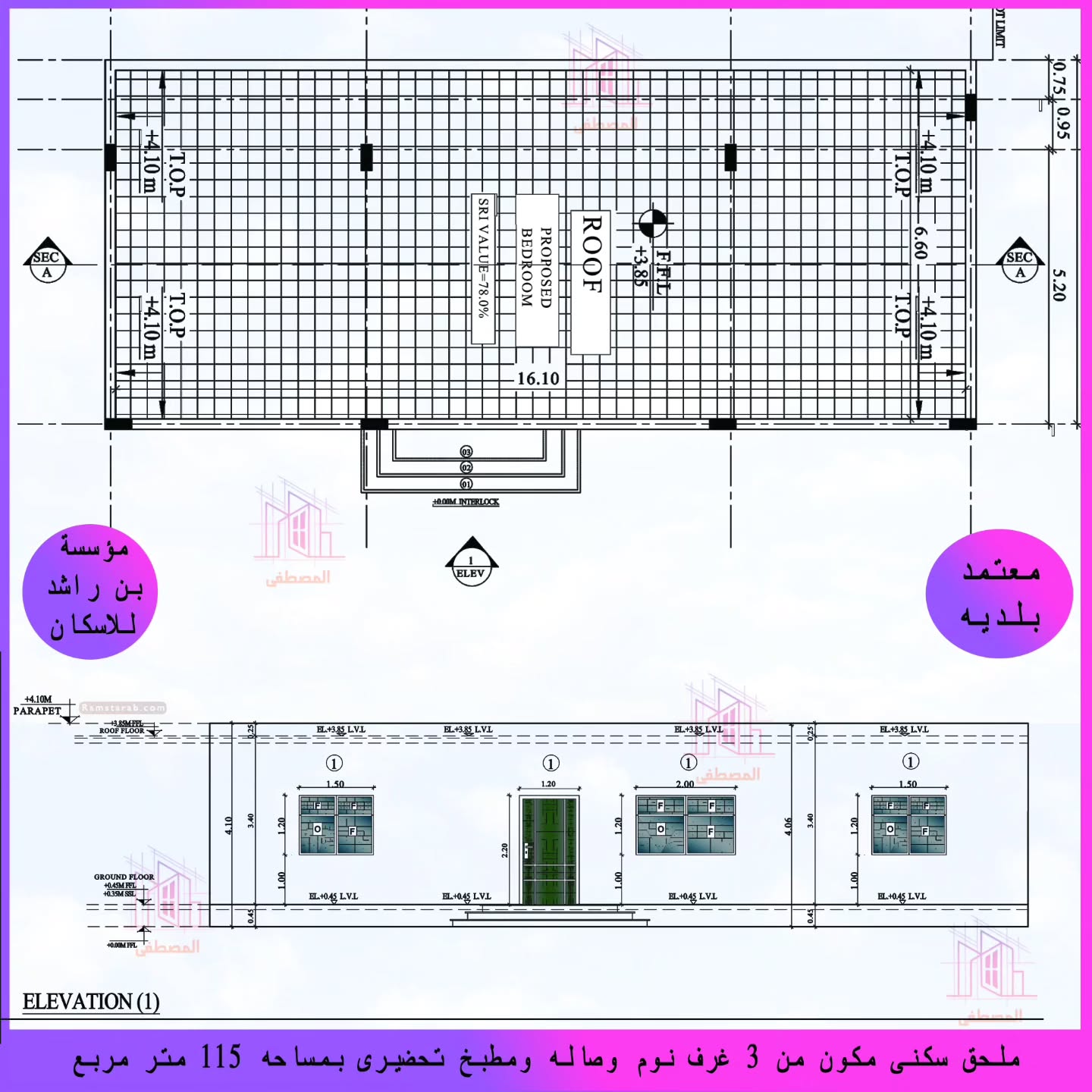
- An extension adds equipment, so the engineer recalculates the total connected load and the maximum demand and shows them in schedules that go to DEWA.
- Only enrolled consultants and contractors can submit DEWA's application. The owner cannot apply directly: the owner appoints the enrolled consultant or contractor and signs the supply terms before supply is released.
- DEWA's connection page says the consultant or contractor can follow the same guidelines for additional-load requests.
- The existing load on the plot counts in the cost slab, but only the proposed load is charged.
- DEWA does not publish a dedicated villa "load increase" form with fixed steps that we could find, so we flag that part as unconfirmed and do not invent it.
- Fees are shown by DEWA when the application is made, so this guide quotes no figures.
Why does a villa extension increase the electrical load?
The electrical system of your villa was designed for the equipment it had on the day it was connected. An extension changes that picture: extra bedrooms bring lighting, sockets and split units; a new kitchen brings an oven, hob and water heating; a majlis or service block brings its own air conditioning; an annex may bring a complete second household. Together they raise the total connected load, which is the sum of everything that can be connected, and they usually change the maximum demand, which is the load expected to run at the same time.
That is why the electrical design for an extension is not an afterthought. It decides whether the existing main distribution board and incomer have room for the new load, where the new distribution board goes, and how the cable reaches it. Our guide to building a majlis or villa annex in the UAE covers the project as a whole; this article covers the electrical declaration inside it.
How do you calculate the villa's total connected load?
DEWA's application asks for a summary of the total connected load together with the main and sub-main distribution board (MDB and SMDB) schedules and the maximum demand, including the number of kWh meters. Your engineer prepares these. In practice the work looks like this:
- List the existing load: what the villa already has, taken from its approved drawings or checked on site.
- List the new load: lighting, sockets, air conditioning, kitchen equipment, water heaters, pumps and any special equipment the extension brings.
- Build the schedules: each distribution board gets a schedule, and the summary shows the total connected load and the maximum demand.
- Draw it: the single line diagram shows low-voltage distribution and tariff metering, and the wiring layouts show lighting and power.
Who submits a DEWA additional load application?
DEWA's "Getting Electricity Permits and Connections" is a single online application. It bundles the Building NOC for electricity and the connection request, and its output is the approved NOC, the design approval and an estimated invoice. Only enrolled consultants and contractors can submit it, through the DEWA website or the Build in Dubai app, and manual submission is not possible.
The route depends on who licenses the work:
- Projects licensed by Dubai Municipality: the request goes through the Dubai Building Permit System (Dubai BPS) and DEWA receives it by digital integration, with no separate application in DEWA channels. See our building permit guide for that system.
- Other authorities, such as free zones: the application is made through DEWA channels.
The same page notes that the consultant or contractor can follow the same guidelines for additional-load or temporary-supply requests. That is DEWA's own statement, and it is the basis for treating a load increase like a connection application. If you build with a contractor who also handles the electrical work, one team can prepare the design, submit the request and follow it through; see our villa construction services.
What documents does DEWA ask for?
DEWA lists the following for the connection application. Your consultant or contractor confirms which apply to a load increase on your villa.
| Document | What it shows |
|---|---|
| Load summary | Total connected load, MDB and SMDB schedules, maximum demand, number of kWh meters |
| Single line diagram | Low-voltage distribution and tariff metering |
| Setting-out plan | Meter location, shown when the load is under 400 kW |
| Layout and ground floor plan | LV room, kWh meter and MDB positions |
| Electrical room details | Dimensions of the room or cupboard |
| Wiring layouts | Lighting and power |
| Premise details sheet | DEWA template |
| Site photo | Submitted with the low-voltage inspection request |
Before supply is released, the owner signs DEWA's "Terms and Conditions for Supply of Electricity - Water".
Is the fee based on the whole villa load or only the new load?
DEWA calculates the connection cost on the approved total connected load, using a slab unit rate per kW across 14 slabs, regardless of cable length or route. For a plot that already has a connection, DEWA's builder FAQ says the slab starts from the existing load but only the proposed load is charged. In plain terms, the existing load counts in the slab, and you are charged for the new part.
The per-kW rates are published in DEWA's electricity connection cost calculator and the estimate is shown when your consultant or contractor applies, so this guide does not quote figures. Note that the application itself is free of charge, while the connection cost is not, and that DEWA's estimate is valid for one year from the date of issue.
Will my meter or incomer need to change?
Sometimes the extension can be served from the existing incomer and meter location, and sometimes the design shows that something must move. Two DEWA sources matter here:
- A point from the ASRA'A FAQ: DEWA's builder FAQ answers a question about increasing the load of a permanent connection after an ASRA'A connection (ASRA'A is DEWA's optional construction-supply initiative for contractors). It says load adjustments, up or down, can be made without changing the main incomer MCCB rating and the meter location, and that changing the meter location after the job is executed and supply released is not recommended because additional work may revise the invoice with additional cost. DEWA states this for ASRA'A, so ask your consultant whether it applies to your case.
- Electricity Network Modification: if meters, substations or cables have to be shifted, DEWA has a separate service for enrolled contractors and consultants. DEWA gives an estimate within 10 working days of submission, the application is free, the modification itself is chargeable where applicable, and the estimate is valid for 12 months. A site setting-out plan is needed for meter shifting.
How long does DEWA take to review load drawings?
For the permanent connection application, DEWA publishes these service times:
| Step | DEWA published time |
|---|---|
| Building NOC - Electricity | 2 working days |
| LV design approval, 1 to 150 kW | 1 working day |
| LV design approval, 151 to 400 kW | 2 working days |
| LV design approval, 401 kW and above | 3 working days |
| Connection cost issuance | 1 working day (Al Namoos, 1 to 150 kW) or 3 working days (other projects) |
| LV inspection | 1 working day from submission |
These times are for the connection application. DEWA does not state a separate review time for a villa load-increase request, so treat them as a guide and not as a promise. They also start when a complete request is submitted, so preparing schedules and answering comments take extra time. The LV inspection is requested once the installation and wiring are complete and the connection invoice is paid; the result is given on the spot as approved or a snag list, and DEWA then confirms the date for meter installation and supply release.
What DEWA does not state publicly
We looked for a dedicated DEWA page or form for increasing the load of an existing villa and did not find one. That means the following are unconfirmed, and we leave them out as facts:
- A fixed step-by-step list and document set for villa load increases specifically.
- A review time specific to a load-increase request.
- Whether an annex gets its own meter or shares the main villa meter. This follows the approved electrical design and DEWA's decision.
- Whether a load increase with no building works needs a separate Dubai Municipality permit.
Your consultant or contractor should confirm these with DEWA for your plot. DEWA also publishes its Regulations for Electrical Installations (2017 edition) as a PDF, which electrical designers can consult; see the official sources below. For design rules beyond electricity, read our Dubai Building Code guide and the guide to Al Sa'fat and thermal insulation, because insulation and equipment choices affect the cooling load.

Checklist before the extension design is finalised
- Write down every room, kitchen, air conditioner and special appliance the extension will have, and any you may add later.
- Ask the engineer for the updated total connected load and maximum demand, with the MDB and SMDB schedules.
- Check that the existing incomer and distribution board can take the new load, or plan for the change.
- Fix the new distribution board location, the electrical room or cupboard size, and the cable route.
- Fix the meter location in the design so it does not move after supply release.
- Confirm with the consultant or contractor which route applies: Dubai BPS for Dubai Municipality projects, or DEWA channels for other authorities.
- Ask when the fee will be shown, and keep in mind the estimate is valid for one year.
- Agree who coordinates the DEWA application, the inspection request and the meter appointment.
Get the electrical drawings approved at the start of the project, not at the end; the final electrical inspection and the permanent meter come at the end. Our guides to the inspections and completion certificate, the contractor agreement and the cost factors help you plan the rest. If you are building a new annex rather than extending, read how DEWA connects a villa annex, how temporary construction power works, and what Shams Dubai rooftop solar adds to the picture.
Frequently asked questions
Do I need DEWA approval before adding air conditioners to an extension?
Air conditioners add to the connected load, which is declared in the load summary and schedules your engineer prepares and DEWA reviews as part of the design approval. We did not find a DEWA rule for air conditioners alone, so ask your consultant to confirm for your case before you buy units.
Who submits a DEWA load increase request?
An enrolled consultant or contractor. DEWA states that only they can submit its application and that they can follow the same guidelines for additional-load requests. The owner appoints them and signs the supply terms before supply is released.
Will my meter need to move?
That depends on the electrical design. The only DEWA statement we found on this is in the ASRA'A part of its builder FAQ, which says load can be adjusted without changing the main incomer rating and meter location, so ask your consultant whether it applies to your case. If a move is needed, Electricity Network Modification is the DEWA service for it, and moving a meter after supply release is not recommended.
Is the connection fee based on the whole villa load or only the new load?
The slab starts from the existing load, but only the proposed load is charged, according to DEWA's builder FAQ. The estimate is shown when your consultant or contractor applies.
How long does DEWA take to review load drawings?
For connection applications DEWA publishes 1 working day for LV design approval from 1 to 150 kW, 2 days from 151 to 400 kW and 3 days from 401 kW. It does not state a separate time for villa load increases.
How do I increase the electricity load of my villa?
Ask an enrolled consultant or contractor to prepare the load summary, schedules and drawings and to submit the request. We did not find a dedicated villa load-increase procedure on DEWA's pages, so they confirm the exact route with DEWA.
Can I apply to DEWA myself?
No. DEWA states that only enrolled consultants and contractors can submit the application, and that it is online only.
Does the application cost anything?
DEWA lists the e-service application as free, while the connection itself is chargeable. The fee is shown by DEWA when your consultant or contractor applies.
Need help with the extension design?
We are happy to look at your villa and the extension you have in mind and help you plan the electrical load with your consultant. Message us on WhatsApp, use the contact page, try the free cost calculator or browse our projects.
This article summarises public DEWA pages for owners and is not legal or engineering advice. The official DEWA website and current requirements prevail.
Official sources
- DEWA: Getting Electricity Permits and Connections
- DEWA: Electricity Network Modification
- DEWA: Electricity Connection Cost Calculator
- DEWA: Builder FAQ
- DEWA: ASRA'A initiative
- DEWA: Al Namoos
- DEWA: Regulations for Electrical Installations, 2017 edition (PDF)
Planning your next project?
Talk to the Al Mustafa team for advice and a quotation for your project in the UAE.
Related articles
 17 November 2026Periodic Inspection of a Villa Electrical Installation in Dubai: Alterations, Labels and Upkeep After HandoverRead article
 15 November 2026Building an Annex or Majlis with MBRHE Support: A Practical GuideRead article