

12 min read
In this article
- Green building regulations in Dubai: in short
- What is Al Sa'fat, Dubai's green building system?
- Dubai green building regulations: the three Al Sa'fat ratings and which one you need
- Thermal insulation requirements in Dubai: the numbers
- Glass under Al Sa'fat: area, U-value and shading
- Which thermal insulation materials are accepted in Dubai?
- Practical choices for an annex
- Walls
- Roof
- Glazing and shading
- Air conditioning
- How Al Sa'fat compliance runs from design to completion
- Who prepares what
- Frequently asked questions
- What is Al Sa'fat in Dubai?
- Do the green building regulations in Dubai apply to a villa annex?
- What are the thermal insulation requirements in Dubai for walls and roof?
- Do I have to aim for Gold or Platinum Sa'fa?
- Which thermal insulation materials does Dubai Municipality accept?
- Where can I read the Al Sa'fat green building regulations in Dubai?
- Does a sandwich-panel roof meet the requirement?
- Does this apply to my existing villa?
- Official sources
Dubai's green building regulations are built around Al Sa'fat, the Dubai Municipality (DM) green building system, and for a villa annex or majlis they come down to a practical question: how well must the walls, roof and glass keep the heat out? This guide explains what Al Sa'fat is, which rating applies, the thermal insulation requirements in Dubai in plain numbers, and how to choose walls, roof and glazing so the design, the permit and the site work all follow one specification.
Green building regulations in Dubai: in short
- Al Sa'fat is the system behind the green building regulations in Dubai. It has three ratings: Silver, Gold and Platinum. Silver is mandatory for new buildings in Dubai; Gold and Platinum are optional.
- For a villa, some Silver criteria are optional under the regulation, but the building envelope rules in the Dubai Building Code still apply: roof up to 0.3 W/m²K and external walls up to 0.57 W/m²K. Gold and Platinum ask for 0.42 for walls.
- Glass is limited too: at most 40% of the wall area for residential buildings, with a maximum U-value, shading coefficient and minimum light transmittance that depend on how much glass the walls carry.
- Insulation products must be certified by Dubai Central Laboratory, and DM's sample insulation sections carry an undertaking that approved insulation and glass will be used.
- Decide the wall system, roof build-up and glass type at the design stage, so the permit, the price and the site work all follow the same specification.
What is Al Sa'fat, Dubai's green building system?
Al Sa'fat (the word means palm fronds) is the core of the green building regulations in Dubai, officially called Al Sa'fat, Dubai Green Building System. It was adopted by Administrative Decision No. (154) of 2020, which cancelled the earlier green building decisions, and DM published an updated second edition in January 2023. The regulation covers energy, water, materials, indoor environment and more. For an owner, the part felt most directly is the building envelope: insulation, glazing and air conditioning efficiency.
The decision applies to every building licensed after it took effect, and to additions or modifications licensed on an older building. An annex, a majlis or an extension is normally an addition, so it falls within its scope; confirm your case with DM when applying. Temporary buildings that will be removed within two years are excluded.
Dubai green building regulations: the three Al Sa'fat ratings and which one you need
| Rating | Status | Certificate validity |
|---|---|---|
| Silver Sa'fa | Mandatory for new buildings in Dubai | No fixed term for private villas; 15 years for other building types |
| Gold Sa'fa | Optional | 5 years |
| Platinum Sa'fa | Optional | 5 years |
Within the green building regulations in Dubai, the decision lets some Silver criteria be optional for private villas, investment villas and industrial buildings, as listed in the regulation itself. If the owner chooses to aim higher, all the criteria of the higher level apply. The Silver certificate is issued together with the completion certificate, and a completion certificate is not issued if the chosen level's criteria were not applied. See our guide to DM inspections and the completion certificate.
Thermal insulation requirements in Dubai: the numbers
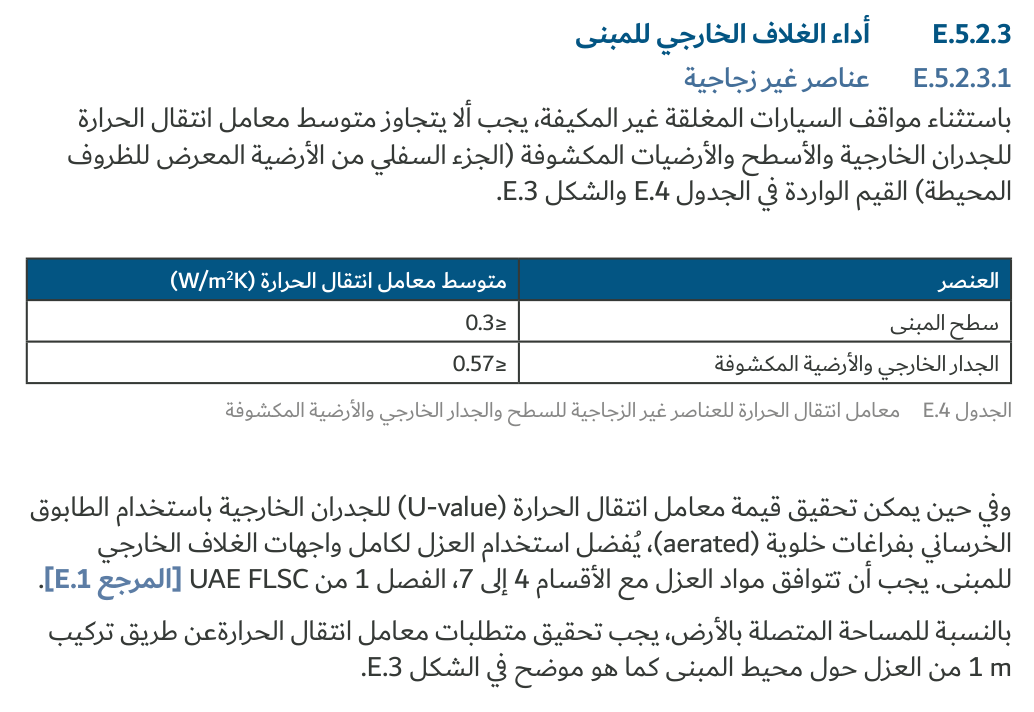
The U-value is the heat that passes through one square metre of a wall or roof for each degree of temperature difference, in W/m²K. The lower the number, the better the insulation. The Dubai Building Code (Decree 45/2021) sets the thermal insulation limits for the elements of the building envelope in Part E, and Part K for villas repeats the same roof, wall and glass values:
| Element | Maximum U-value (W/m²K) |
|---|---|
| Roof | 0.3 |
| External wall and exposed floor | 0.57 |
Floor areas in contact with the ground are handled by insulating 1 m around the perimeter of the building. The code also asks that insulation materials comply with the UAE Fire and Life Safety Code. These are the Silver values; for Gold and Platinum, Al Sa'fat lowers the wall and exposed floor limit to 0.42 W/m²K and keeps the roof at 0.3.
For villas, the Al Sa'fat regulation adds a second target: the average U-value of the whole building envelope must not exceed 0.40 W/m²K, so that thermal bridges at columns, beams and window edges are avoided by making the envelope as a whole more efficient. DM Circular 8-1-1 of 2021 uses a similar figure for walls: instead of applying insulation to columns and beams, the overall wall U-value can be brought to 0.4 W/m²K using one or more of these techniques, depending on the project:
- better glazing and window frame sections;
- walls of denser, lower-conductivity material;
- insulated blocks or lightweight thermal blocks;
- precast insulated walls;
- interior and exterior plaster layers made of heat-resistant materials.
Where the criteria of different sources differ, the decision says to apply the one that achieves higher efficiency. The designer therefore checks the final wall and roof build-up with a U-value calculation, and DM publishes a U-value calculation sheet for this purpose.
Glass under Al Sa'fat: area, U-value and shading
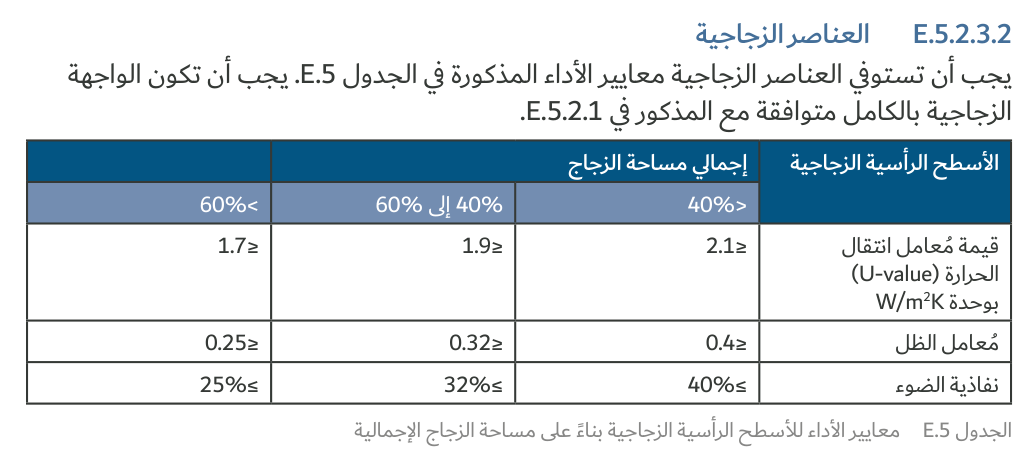
Windows lose and gain far more heat than walls, so glazing has its own limits in the code and in the Al Sa'fat requirements. For residential buildings the glazed area may not exceed 40% of the gross external wall area. Part E of the code also gives each orientation its own cap: 40% for south, south-east and south-west, 60% for east and west, 70% for north-east and north-west, and 80% for north; Al Sa'fat lists the orientation criterion as optional for private and investment villas. The glazing, frames included, then has to meet this table, which depends on the glass share of the walls:
| Glass share of wall area | Max U-value (W/m²K) | Max shading coefficient | Min light transmittance |
|---|---|---|---|
| Below 40% | 2.1 | 0.40 | 40% |
| 40% to 60% | 1.9 | 0.32 | 32% |
| Above 60% | 1.7 | 0.25 | 25% |
The shading coefficient shows how much solar heat the glass lets through, and light transmittance how much daylight. A skylight that covers 10% or less of the roof must reach a U-value of 1.9 and a shading coefficient of 0.32.
Which thermal insulation materials are accepted in Dubai?
Under DM Circular 8-1-1, every insulating product and material must carry valid conformity certificates and marks from Dubai Central Laboratory and meet DM standard specifications, and these certificates are renewed every year. External insulation finishing systems (EIFS) need approval from the DM Building Permits Department before use on site, and the contractor is responsible for following this, together with the supervising consultant where one is appointed. The Al Sa'fat regulation adds that insulation must be free of CFCs, non-toxic and not releasing toxic fumes when burning, fire resistant to Civil Defence requirements, and installed as the manufacturer instructs. DM publishes lists of certified thermal insulation manufacturers, covering polystyrene, spray polyurethane, mineral wool, phenolic and cellular glass products. These lists change, so check the current version on the DM site. More on this in our guide to DM-approved materials and contractors.
Practical choices for an annex
Walls
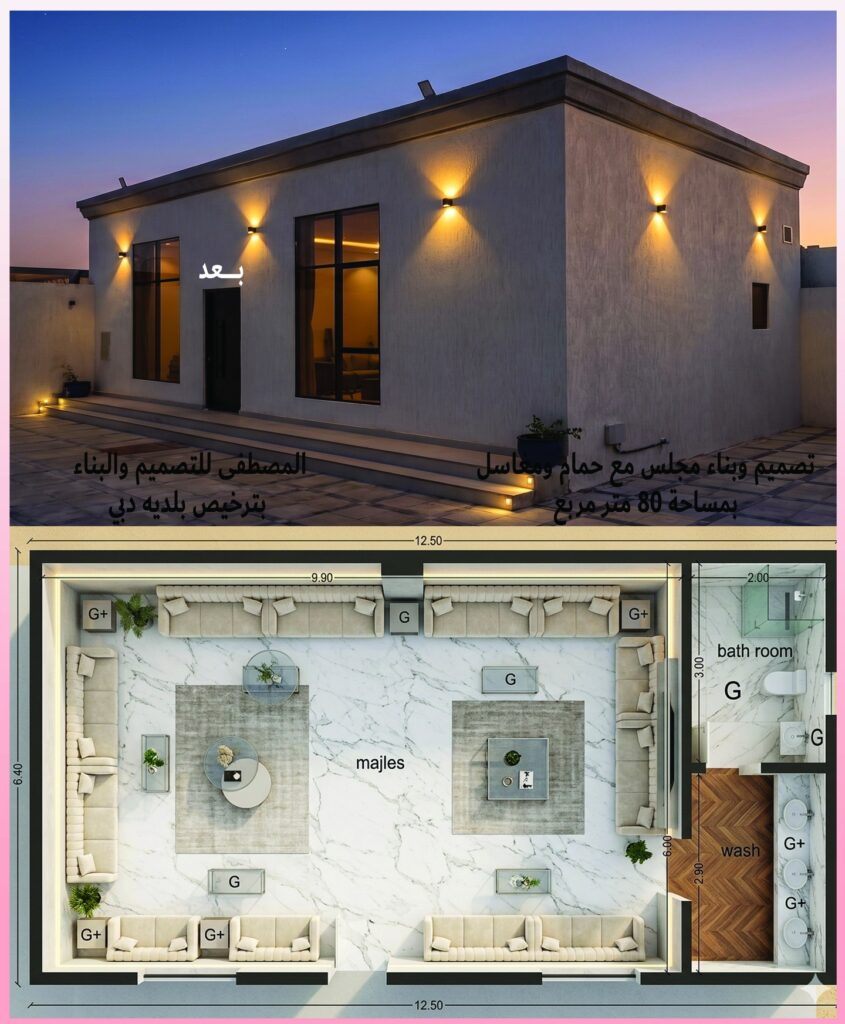
Insulated or thermal blocks or a block wall with an insulation layer are common ways to reach the target, and other systems such as sandwich panel or cement board are judged the same way; what matters is the total U-value of the finished wall, including plaster and any thermal bridges. DM's sample insulation sections for villas show, for example, 5 cm of insulation with a vapour barrier at columns and beams, and variants built with AAC blocks or thermal blocks. They are samples, so your drawings follow the system you choose. Our comparison of annex building systems sets blocks, sandwich panel and cement board side by side.
Roof
The roof takes the most sun, which is why its limit is the strictest, 0.3 W/m²K. In DM's sample villa sections a concrete roof carries a 7.5 cm insulation layer above a 15 cm slab. A sandwich-panel roof is judged the same way: the whole panel build-up has to meet the roof value, so ask for its U-value calculation and the certification of its insulating core. Our guide to the sandwich-panel roof annex covers this option. A sandwich-panel roof has no pour, so the pre-pour roof-slab inspection does not apply to it, while the DM engineer still inspects before the foundations are poured and before a concrete roof slab is poured.
Glazing and shading
Decide the window sizes early. A modest glass area on the south and west sides, with overhangs or a pergola for shade, makes it easier to stay within the limits. Higher-performance glass usually costs more per window, and a wide glass front adds the most, so it is worth discussing the balance in the design stage.
Air conditioning
The regulation also sets minimum efficiency for AC units, following the Dubai Building Code. DM's sample sheets include an AC load table and a note that the minimum EER must follow the rules, so the load calculation and the unit rating go on the drawings together.
How Al Sa'fat compliance runs from design to completion
Who prepares what
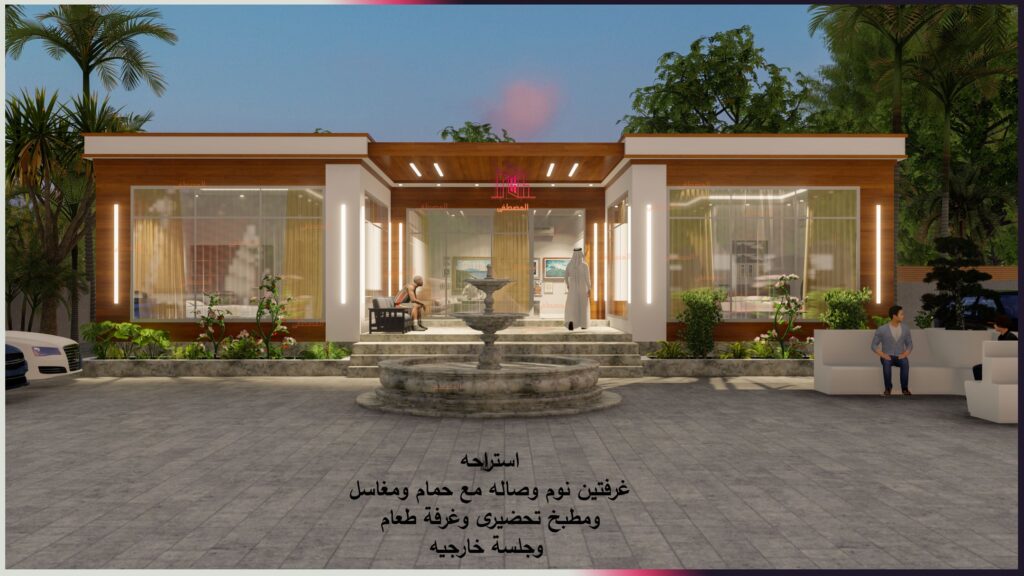
In small projects such as an annex or majlis, a supervising consultant is not mandatory during execution, but a consultant or engineering office may be involved at the design and permit stage. DM Circular 10-1-1 says the consultant office that prepares the design commits to apply the criteria of the chosen rating, the contractor builds according to the approved drawings, and the contractor is responsible for any non-compliance on site. When both work from the same approved specification, each knows exactly what is expected. The permit itself is covered in our guide to the building permit for a villa annex, and the wider rules in the Dubai Building Code guide.
The green building regulations in Dubai apply in areas under Dubai Municipality. Some areas, such as free zones or master-developed communities, follow their own authority, so confirm which one applies to your plot before design starts.
Frequently asked questions
What is Al Sa'fat in Dubai?
It is Dubai Municipality's green building system, adopted by Administrative Decision No. (154) of 2020 and updated in a second edition in January 2023. It grades buildings as Silver, Gold or Platinum Sa'fa and sets requirements for energy, water, materials and indoor comfort.
Do the green building regulations in Dubai apply to a villa annex?
Yes. They apply to buildings licensed after the decision took effect and to additions or modifications licensed on older buildings. Silver is the mandatory level, and the regulation makes some of its criteria optional for private villas. Your designer confirms the exact list for your case.
What are the thermal insulation requirements in Dubai for walls and roof?
The Dubai Building Code limits the roof to 0.3 W/m²K and external walls to 0.57 W/m²K (Gold and Platinum Sa'fa ask for 0.42 for walls). For villas, Al Sa'fat also asks for an average envelope U-value of no more than 0.40 W/m²K.
Do I have to aim for Gold or Platinum Sa'fa?
No. Gold and Platinum are optional. If you choose one, you must meet all its criteria on top of the lower levels, and its certificate is valid for 5 years.
Which thermal insulation materials does Dubai Municipality accept?
Materials certified by Dubai Central Laboratory with valid certificates, meeting DM standards. DM publishes lists of certified manufacturers, so check the current list on the DM website.
Where can I read the Al Sa'fat green building regulations in Dubai?
On the Dubai Municipality website: Administrative Decision No. (154) of 2020 and the second edition of Al Sa'fat (January 2023) are both published there and linked under official sources below. Check the website for the current version.
Does a sandwich-panel roof meet the requirement?
It is judged like any roof: the complete build-up must reach the roof limit. Ask for the U-value calculation and the certification of the insulation inside the panel, and agree the specification before the permit stage.
Does this apply to my existing villa?
The mandatory rules apply to new buildings and to licensed additions or modifications. For existing buildings licensed before 2020, DM issued an optional Greening Guideline in January 2026 for retrofitting.
If you are planning an annex or majlis and want the wall, roof and glass choices sorted before the permit stage, see our services, browse our projects, or message us on WhatsApp or through the contact page. You can also try the free annex cost calculator, read what drives the cost of an annex, or use our 12-point contractor checklist.
Official sources
- Administrative Decision No. (154) of 2020 on the Al Sa'fat Regulation (Dubai Green Building System)
- Al Sa'fat, Dubai Green Building System, 2nd edition (January 2023)
- Circular No. (10-1-1) of 2021 on applying green building requirements and their classification
- Circular No. (10-1-2) of 2023 on updating the Al Sa'fat regulation
- Circular No. (8-1-1) of 2021 on materials and products used in thermal insulation systems
- Circular No. (10-2-1) of 2026, Greening Guideline for existing buildings
- Decree No. (45) of 2021 on the Dubai Building Code and the Dubai Building Code, Part E (building envelope)
- DM U-value calculation sheet and DM approved products and certified insulation manufacturers lists
This article summarises official Dubai Municipality documents for owners and is not legal advice. The official DM website and the current versions of the documents prevail.
Planning your next project?
Talk to the Al Mustafa team for advice and a quotation for your project in the UAE.
Related articles
 15 November 2026Building an Annex or Majlis with MBRHE Support: A Practical GuideRead article
 8 November 2026Building a G+4 or G+6 residential building in Dubai: requirements and stepsRead article
 1 November 2026Dubai Building Code explained: what villa owners and annex builders need to knowRead article