
20 min read
In this article
- In short
- Grant, loan or bank finance?
- How each type is paid, in simple terms
- Design and drawings: start from the budget, not from the dream
- Permits and authorities: Dubai Municipality and DEWA
- Choosing the contractor and what to write in the contract
- Budget and bill of quantities: where does the money go?
- Documents you will need
- From the owner
- From the contractor and the project
- Construction stages, payments and inspections
- Maintenance and renovation within the same project
- Handover and the final payment
- After handover: warranty and upkeep
- Quick checklist
- Examples from our projects
- Our annex cost app
- Frequently asked questions
- What is the maximum amount of the addition and maintenance grant?
- Can I get the larger amount to build an annex?
- Is the MBRHE loan charged with interest?
- Is a Municipality inspection required before casting the foundations and the roof?
- Do I need a supervising consultant for a small annex?
- Who pays the contractor, MBRHE or the bank?
- How much is the monthly instalment of the MBRHE loan?
- What is Istisna'a?
- Do I need a Municipality permit to build an annex?
- When should I start the DEWA procedures?
- Why are payments released in stages?
- What if the contractor stops working?
- What is required to receive the final payment?
- The next step
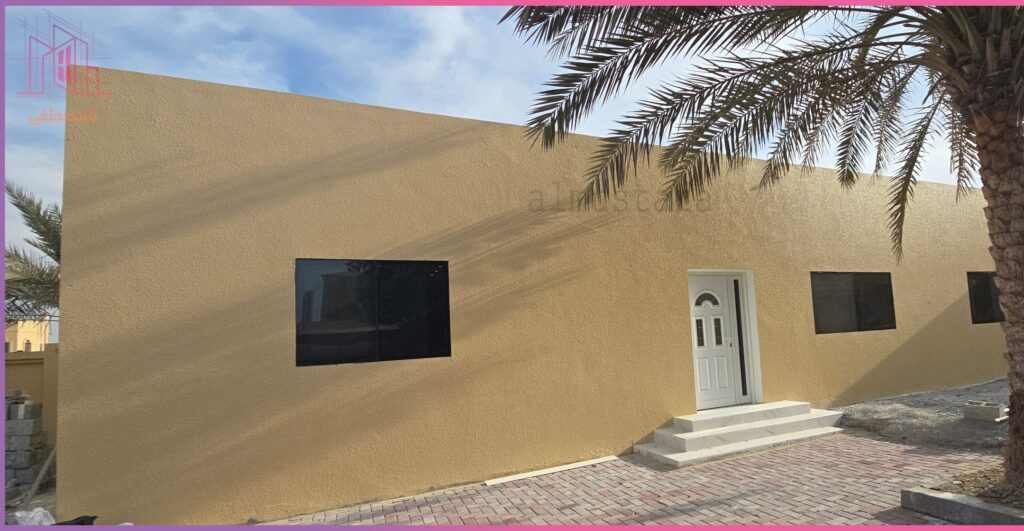
If you are planning an annex, a majlis or an extension to your home in Dubai with support from Mohammed Bin Rashid Housing Establishment (MBRHE), you are probably asking the questions every client asks at the start: grant or loan? Where do I begin? What will the Municipality and DEWA expect? And how do I choose a contractor who protects my rights and my budget?
We wrote this guide in plain language, from what we see with clients on real projects. We are Al Mustafa Contracting: we build for MBRHE beneficiaries and guide them through the requirements. Conditions, amounts and procedures are set by MBRHE alone, so always rely on its official channels before making any decision.
In short
- According to what has been published about it, MBRHE offers a grant and an interest-free loan for maintenance, addition and replacement works, with a larger amount for full replacement (demolish and rebuild) only.
- A grant is paid by MBRHE directly. A loan is delivered through Emirates Islamic under an Istisna'a contract: the bank pays for the construction in stages, and you repay MBRHE in monthly instalments (in our clients' experience, about AED 1,000 a month on a AED 300,000 loan).
- An addition (annex or majlis) is not the same as full replacement, so do not base your numbers on the larger amount before MBRHE confirms your category.
- Approved design and drawings first, then permits, then construction. Starting before the permit exposes you to fines and problems.
- A clear bill of quantities and a detailed written contract prevent half the usual problems.
- Do not close the project before you hold the building completion certificate, the electrical inspection and permanent meter, and the warranties.
The figure below shows the client journey from start to finish, and the sections that follow explain each step.
Grant, loan or bank finance?
The first question is which type of support applies to you. From the official pages we know MBRHE serves citizens of the Emirate of Dubai and that maintaining existing homes and building additions to them is part of its remit. Published information about its services mentions a grant and an interest-free loan for maintenance, addition and replacement works, with a ceiling of roughly AED 300,000 for maintenance and addition, and a larger amount for full replacement (demolish and rebuild). We do not give final figures here because amounts and conditions can change and differ by category, so the final reference is an MBRHE employee, its call centre (80030) or its official website, mbrhe.gov.ae.
| Option | What it means | What to confirm |
|---|---|---|
| MBRHE grant | A non-repayable amount for maintenance, addition or replacement works. Paid directly by MBRHE to the contractor according to approved progress, with no bank involved | Your category, the current cap, and whether your project is an addition or a replacement |
| MBRHE loan | An interest-free housing loan, delivered through Emirates Islamic (in our clients' experience under an Istisna'a contract). The bank pays for the works in stages and you repay MBRHE in monthly instalments | The loan amount available to you, the monthly instalment, the repayment period and the deduction from income |
| Own bank finance | Separate finance from a bank of your choice for what support does not cover, or if you do not qualify. It is not part of the MBRHE grant or loan | Total final cost, the bank's conditions and documents; compare more than one offer |
For your own bank finance (separate from the MBRHE loan) we only give general advice: do not look at the monthly instalment alone, but at the total you will pay in the end, the repayment period, and the documents and guarantees the bank requires. Ask more than one bank, get the terms in writing, and never commit to an amount that leaves no comfortable room in the family budget.
How each type is paid, in simple terms
The figure below compares the two routes at a glance.
1. The grant. The grant comes directly from MBRHE and no bank is involved. After MBRHE approves your case, the contractor works according to the approved drawings and contract, and MBRHE releases payments to the contractor against approved progress, after the stage is inspected.
2. The loan, through Emirates Islamic. This is what we see on our clients' projects: the MBRHE housing loan is delivered through Emirates Islamic under an Istisna'a contract. Istisna'a is an Islamic finance contract in which the bank commissions the construction of something and pays for it as it is built, instead of lending you cash. In practice, the bank deals with the contractor and pays for the works in stages, MBRHE settles the amount with the bank, and you, the beneficiary, repay MBRHE in monthly instalments. The citizen does not pay interest on it. As a real example from our clients' experience, a loan of about AED 300,000 was repaid at roughly AED 1,000 per month. This is an example, not a promise: the exact instalment and period depend on your case and are decided by MBRHE.
What is published, and what is not. Public sources confirm that Emirates Islamic is one of MBRHE's partner banks for Shariah-compliant housing finance, that the bank can finance building a home under the MBRHE programme, and that funds are released only after the contractor submits an invoice and documents proving the completed work, with progress review and site visits by engineers. Older MBRHE material also states that MBRHE bears the profit while the beneficiary repays the principal, which is consistent with the loan being interest-free for you. However, the bank's public pages describe its product in general Shariah-compliant terms and do not use the word Istisna'a, and the MBRHE and Emirates Islamic partnership announced in October 2025 concerns awareness and sponsorship, not a financing product. So the Istisna'a structure and the instalment example above come from our own clients' experience; confirm the contract type and your instalment with MBRHE and the bank in writing.
What this means for you and for the contractor.
- For the owner: you do not hand cash to the contractor. Payments go from the financing party to the contractor against inspected stages, and you only repay MBRHE the agreed instalment.
- For the contractor: with a loan, the contractor works within the bank's process, which means a contract and bill of quantities that match exactly, a building permit in the contractor's name, undertaking letters, and a bank account letter (IBAN) for receiving payments. With a grant, the contractor deals with MBRHE directly.
- For both: no payment before the stage is completed and approved, and the final payment waits for the completion certificate and the electrical inspection.
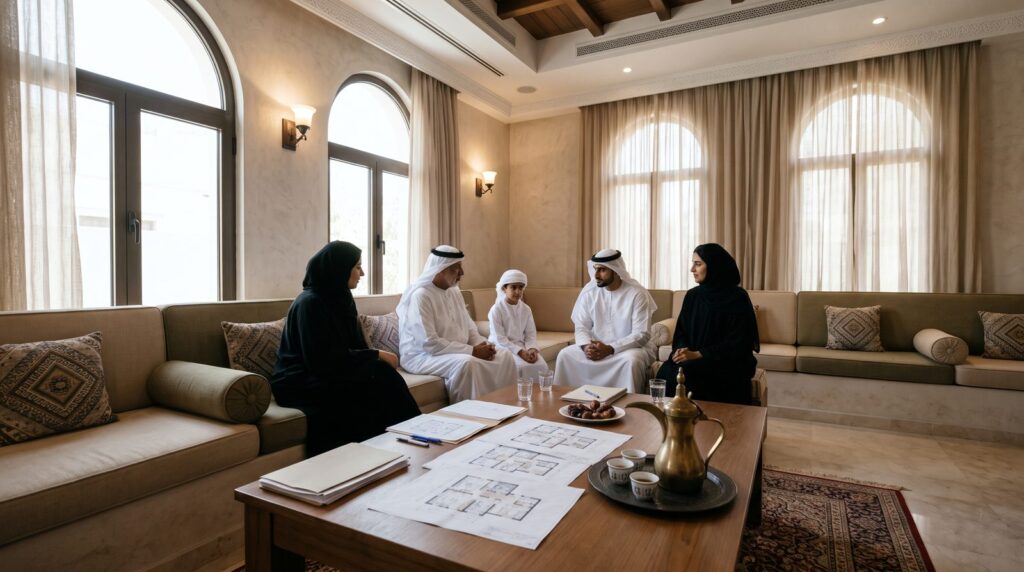
The practical takeaway: start by asking MBRHE about your category and amount, then come to us with your drawings or idea, and together we calculate what can be built within the available amount before you commit to anything.
Design and drawings: start from the budget, not from the dream
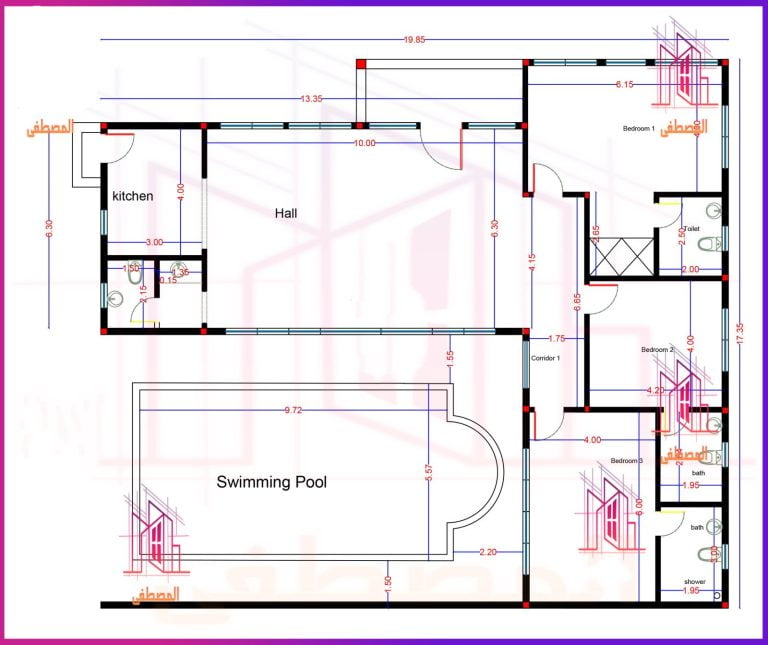
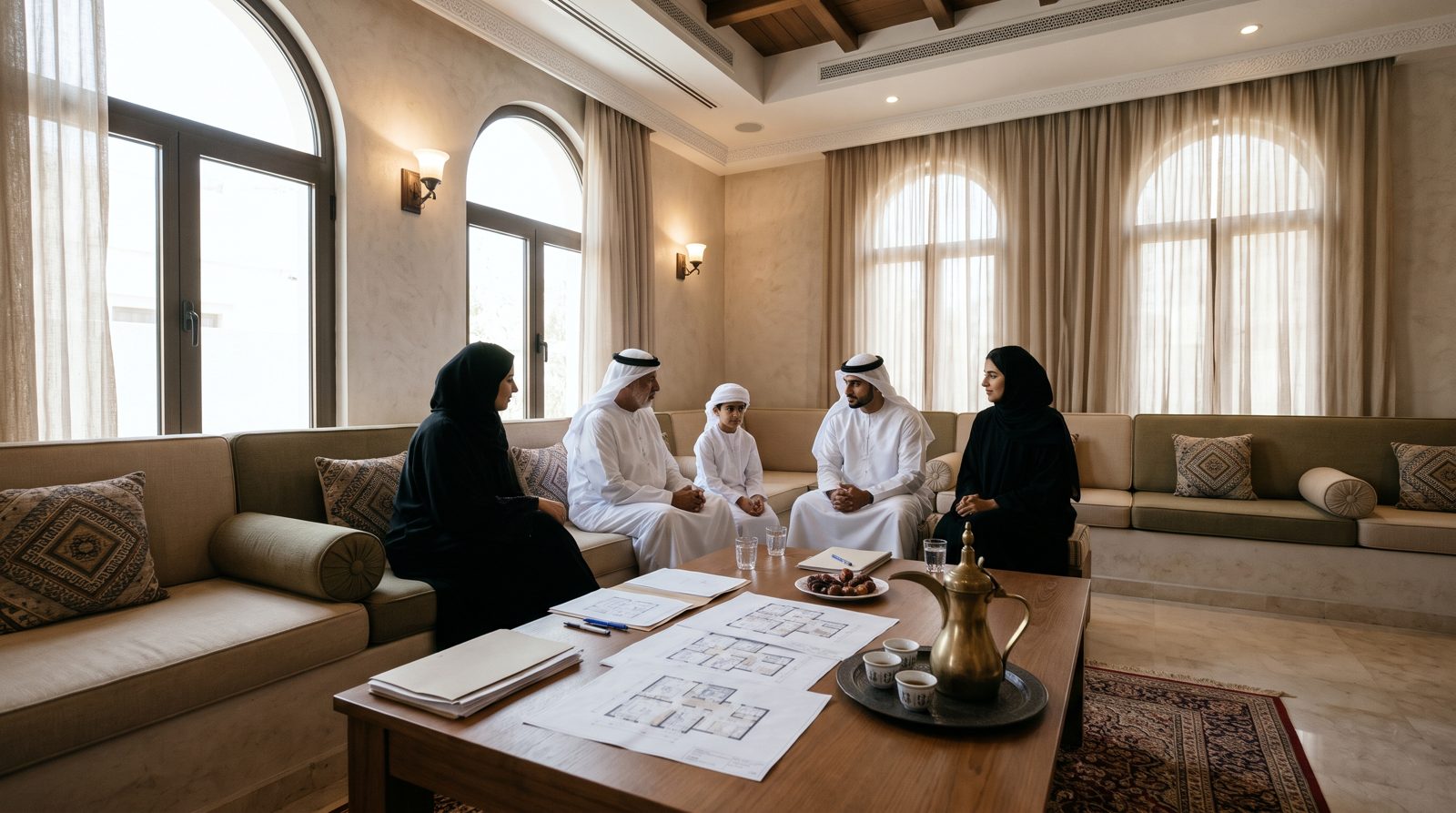
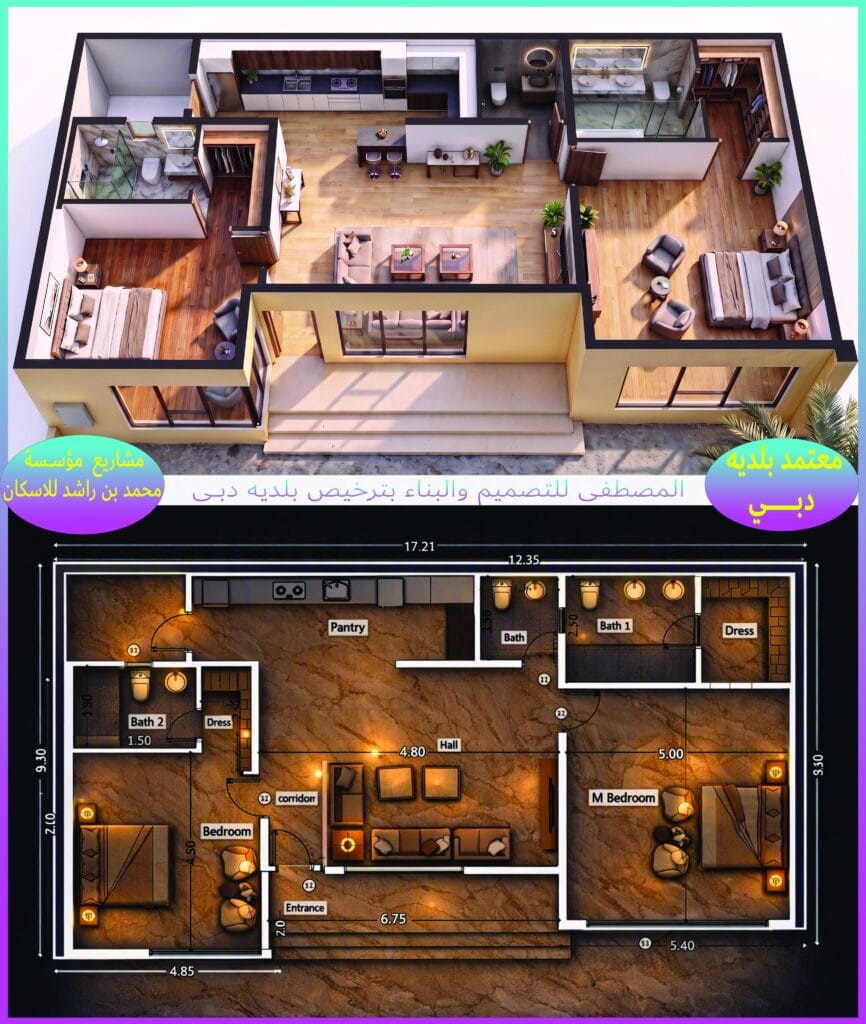
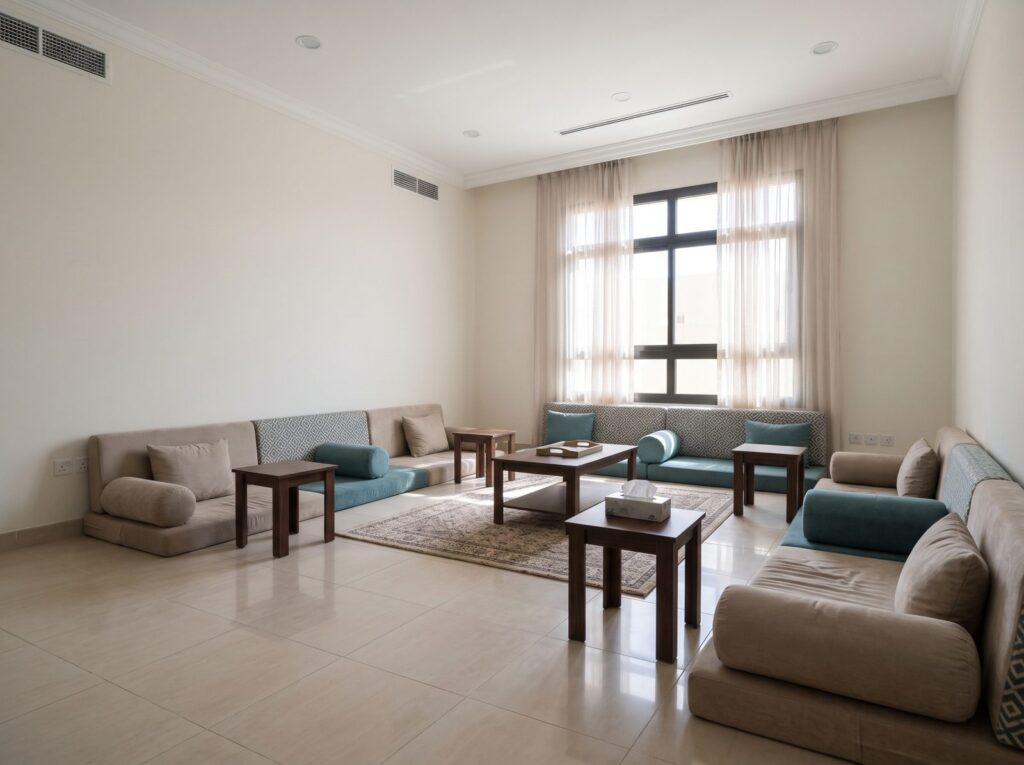
The client who struggles most is the one who starts with a large design and then discovers the budget does not cover it. It is better to decide first what you really need: a majlis for guests, extra bedrooms, a hall, a prep kitchen, bathrooms. Then the annex is drawn so that it connects to the existing house and respects the setbacks, permitted areas and Municipality rules. Architectural and structural drawings are prepared by a licensed engineering office and approved before any work starts. A supervising consultant is not required for small projects such as annexes and majlis.
A tip from experience: agree on the final design before excavation begins. Any change to the drawings after approval means delay and cost, and the financing party may require written consent before any change. If you want a first idea of the numbers before sitting down with us, we have a free cost calculator app for annexes that gives a preliminary estimate. The final estimate comes after a site visit.
Permits and authorities: Dubai Municipality and DEWA
Permits are the part that worries most clients, yet it is simply an orderly sequence once you know it from the start. In our projects it usually runs like this:
- Funding: confirm the financing party has approved the support or loan.
- Permit: obtain the building permit from Dubai Municipality. Dubai lists a permit to build extensions to private villas among its e-services. Do not start any work before it is issued.
- Electricity early: prepare and get the electrical drawings approved by DEWA at the start of the project, not at the end, so connection is not delayed at handover.
- Construction: building stages, with the Municipality engineer inspecting and approving before the foundations are cast and before a concrete roof slab is cast.
- Final inspection: electrical inspection and installation of the permanent meter.
- Building completion certificate: issued by the Municipality after the works are completed, inspected and approved.
The details, documents and fees of each step change from time to time, so check them on the official government e-services. If your house or annex already exists without a licence, that is a different route, which we explained in licensing an existing annex or building in Dubai.
Choosing the contractor and what to write in the contract
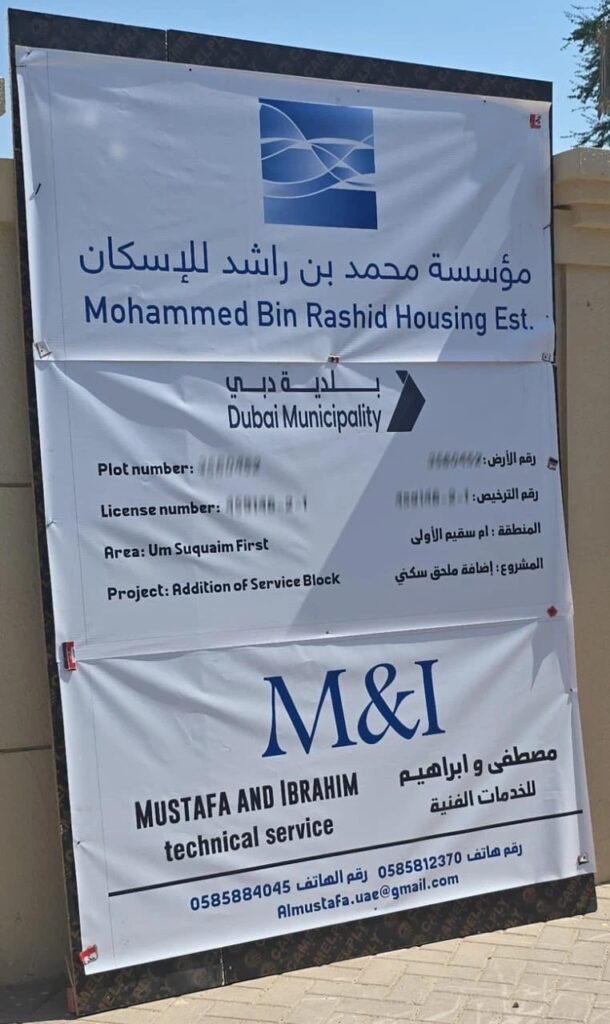
Choosing the contractor is the most important decision in the project, and the price of the quote is not the only measure. Ask about the contractor's licence and its suitable activity (construction and maintenance may be different activities), about the name on the permit, and about completed projects you can visit or see photos of, and request a written quotation with a detailed bill of quantities. If an offer is far cheaper than the others, ask what was left out.
The contract should not remain spoken words. A good written contract usually includes:
- A detailed scope of works and the total contract value, stating VAT.
- The execution period in days and the agreed handover date, including any preparation and permit period.
- Delay damages: a clear daily amount and an upper cap.
- What happens if works stop without justification for a defined period.
- No subcontracting without the owner's written consent.
- A payment schedule tied to real progress verified by the financing party.
- A retention percentage from each payment, and a maintenance retention for a defined period after handover.
- Warranties: workmanship warranty, and any performance guarantee the financing party may request.
These are clauses we see in serious contracts. They are not a template imposed by MBRHE; the contract obligations required by the financing party come to you directly from it, so ask for them and read them before signing.
Budget and bill of quantities: where does the money go?
The bill of quantities (BOQ) is the sheet that divides the project value into items: mobilisation and excavation, foundations, concrete structure, blockwork and plaster, electrical, plumbing and air conditioning, aluminium and joinery, tiling, paint and finishes, and external works. Having it in a clear format helps in three ways: you compare offers accurately, you follow progress at each payment, and you know where every dirham went.
We do not quote ready-made figures here, because cost changes with area, finishing level, ground conditions and structural requirements, and any general number could mislead you. But remember this rule: premium finishes raise the budget more than anything else, so decide their level early, and choose materials and colours in good time so work is not delayed waiting for your decision.
Documents you will need
The financing party gives you its exact list. This is what is typically requested, and it may grow or shrink depending on your case:
From the owner
- Emirates ID and passport, and the family book when needed.
- MBRHE approval letter or proof of support.
- Land documents and the approved plan of the existing house.
- Income documents and bank account details if finance is involved.
- An activated digital ID (UAE PASS), as some procedures and signatures are done through it.
From the contractor and the project
- A valid trade licence with the suitable activity.
- Approved drawings and the building permit in the contractor's name.
- The signed contract and a bill of quantities matching its value.
- The contractor's bank account details (an IBAN letter issued by the contractor's bank) and the ID of the authorised signatory.
- If the loan goes through the bank: an original contract on letterhead, signed and sealed on every page, with the total value and a duration within the bank's limit (published as up to 18 months), and undertaking letters from the owner, the contractor (and the consultant, if one is appointed).
Our advice: gather the documents in one file and check expiry dates before applying. One missing document can delay a project by weeks.
Construction stages, payments and inspections
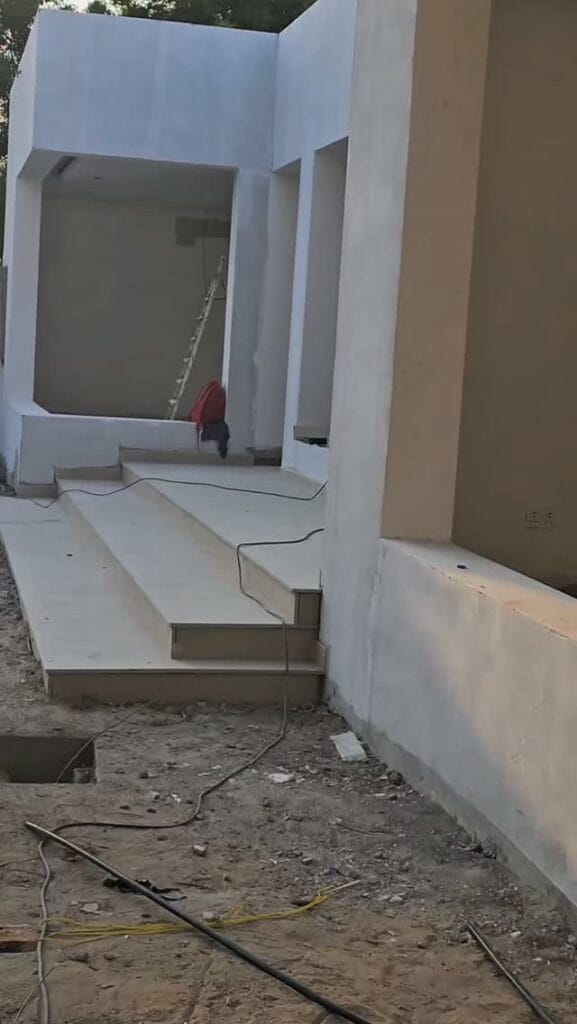
Building usually goes through excavation and foundations, then the concrete structure, blockwork, plaster, electrical, plumbing and air conditioning, aluminium and joinery, tiling and paint, and finally external works. At each stage what was done is inspected before the related payment is approved. Before the foundations are cast, the Dubai Municipality engineer inspects the work and casting is not allowed without his approval, and the same applies before casting a concrete roof slab. A sandwich-panel roof has no pour, so the slab inspection does not apply to it. A supervising consultant is not required for small projects. Do not hesitate to ask the contractor for progress photos and to visit the site from time to time.
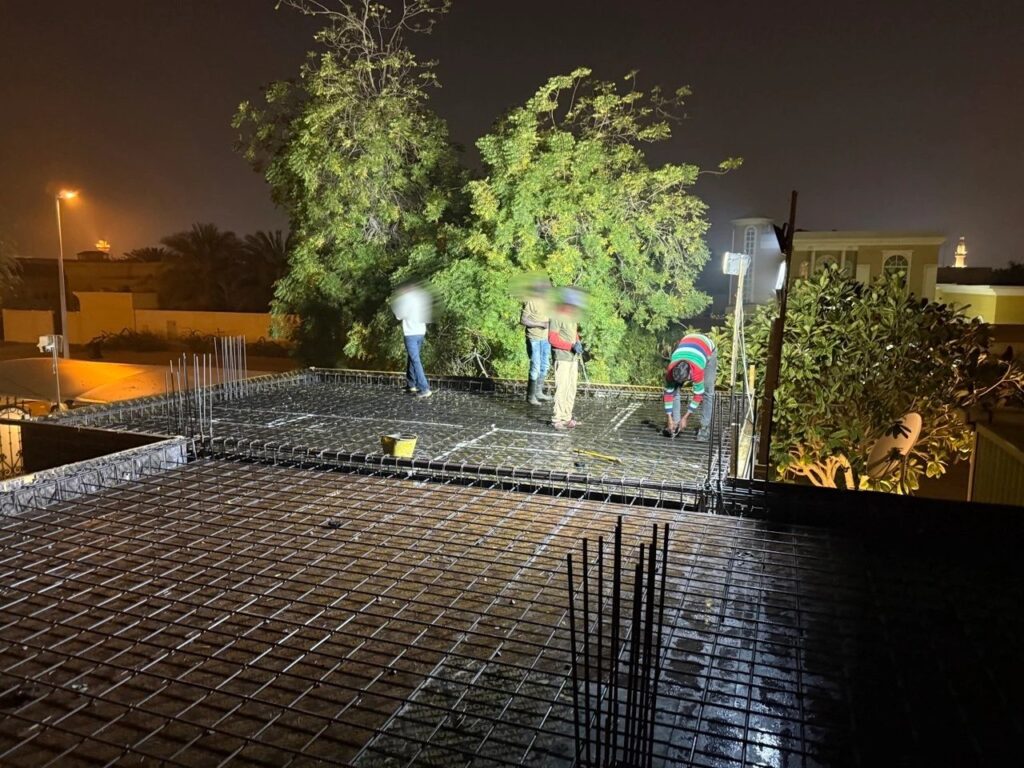
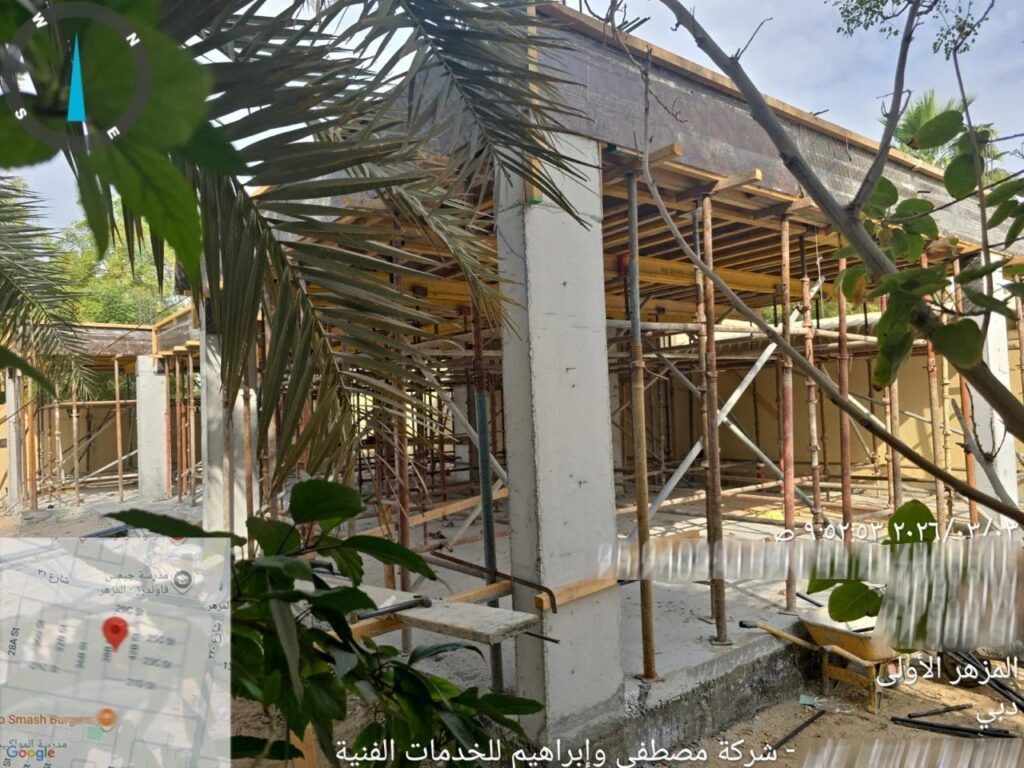
Payments are released according to actual progress, and each financing party has its own verification method. With a grant, MBRHE pays the contractor directly. With a loan, the bank pays the contractor in stages after the contractor submits an invoice and documents proving the completed work, and after progress review and site visits. The final payments are usually not released before the project completes the electrical inspection, the meter and similar items. Ask the financing party and the contractor for a written schedule of payments, percentages and conditions from day one.
Maintenance and renovation within the same project
Many clients want to build an annex and improve the existing house at the same time, for example fixing a roof leak, renewing bathrooms and the kitchen, or restoring the facade and paint. Maintenance is within MBRHE's remit, but can it be combined with an addition in one request, and for what amount? That is a question to put to MBRHE before you place it in your plan.
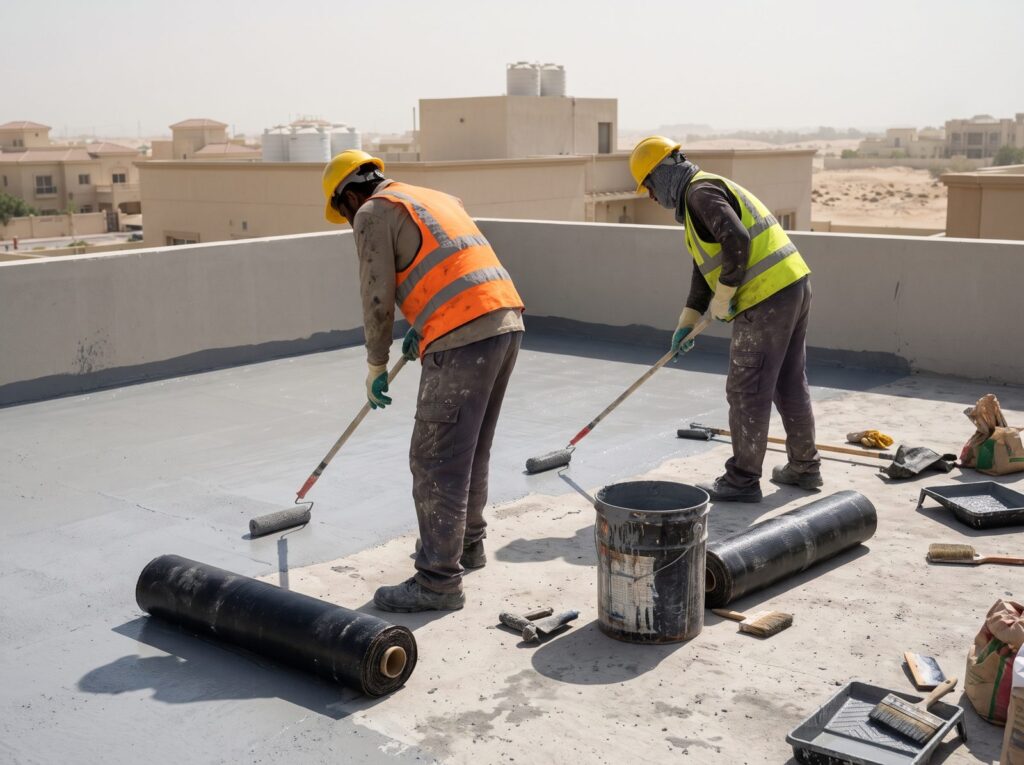
From our maintenance experience: waterproofing matters more than paint. Ask in writing for the material type, number of layers and warranty period, and pressure-test the pipe network before covering it in bathroom and kitchen works. Also make sure the contractor is licensed for maintenance if your project is maintenance, because some bodies require an undertaking or reservations about contractors not licensed for that activity.
Handover and the final payment
Do not consider the project finished because the paint dried. The final payment usually means three things are complete:
- The building completion certificate from Dubai Municipality, if the project has a permit.
- The final electrical inspection and the permanent meter from DEWA.
- The original warranties for waterproofing, paint, air conditioning, water heaters, pumps and more, with operating manuals.
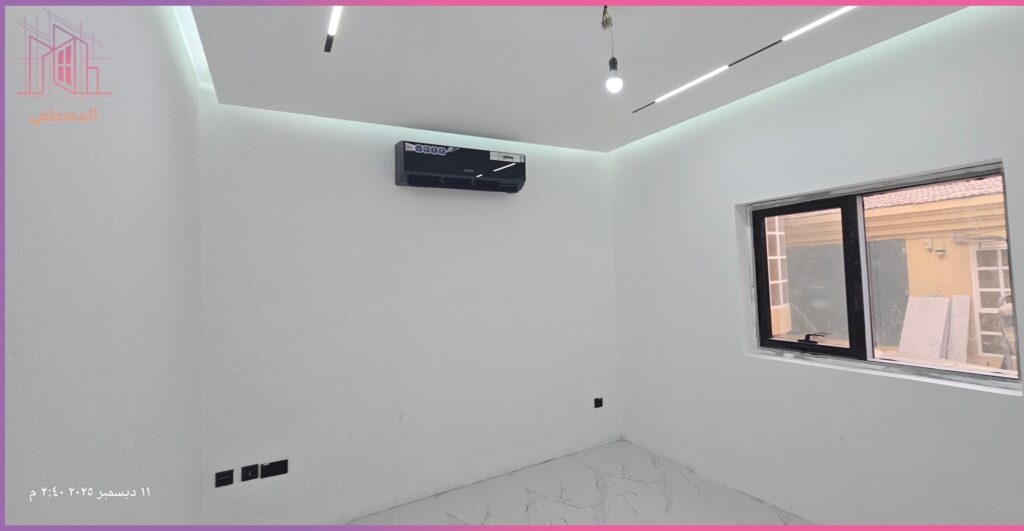
Before signing the handover, walk through the annex with the contractor holding a list of notes: doors and windows, tiles, paint, lighting, drainage, bathrooms, and air conditioners running. Write down every note with the date.
After handover: warranty and upkeep
The contract should ideally include a defects warranty period (usually a year) and a maintenance retention released after it ends. If a defect appears, notify the contractor in writing with a photo and date. In our hot climate, keeping the annex in good shape takes cleaning the air conditioner filters regularly, checking the roof drains before the rainy season, and watching the sealants around windows.
Quick checklist
- I confirmed my category and amount with MBRHE through its official channels.
- I defined my needs and budget before the design.
- Drawings are approved, with no changes after approval without consent.
- The building permit was issued before day one.
- The electrical drawings were submitted early.
- The contractor's licence is valid and has the right activity.
- The bill of quantities and the contract are written and signed.
- The payment schedule and retention percentages are clear.
- The finance documents are complete and valid.
- At handover: completion certificate, permanent meter, warranties.
Examples from our projects
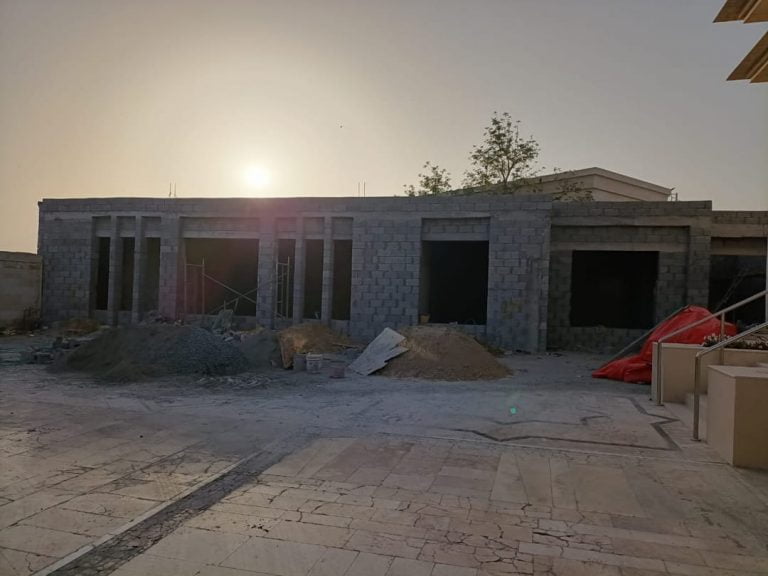
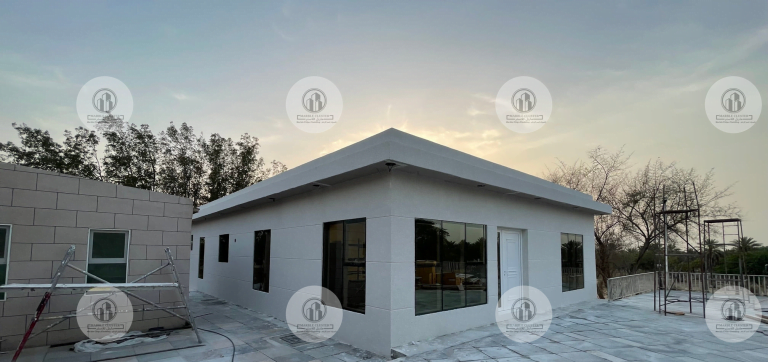
These are projects we built for clients who used MBRHE loans and grants, shown so you can picture the final result and the stages from design to handover:
- Modern 2-bedroom annex in Al Mizhar 1 (130–135 m²): built with an MBRHE loan.
- 3-bedroom villa annex in Al Barsha 3 (115 m²): built with an MBRHE grant.
- 2-bedroom annex with hall and kitchen in Al Quoz (110 m²): built with an MBRHE grant.
Browse all our MBRHE-funded projects or the rest of the projects gallery, and see our services: annexes, majlis, rest houses and renovation.
Our annex cost app
Before you contact us, you can get a first idea of size and cost from our free app “MBRHE Villa Annex Builder” (بناء ملاحق مؤسسة الإسكان): an estimate calculator by area, construction type, kitchen and bathrooms, ready designs, photos of our completed projects, and direct visit booking.
- Read the step-by-step app guide.
- Download it from the App Store (iPhone) or Google Play (Android).
The app’s figures are estimates for planning and do not replace a final quotation after a site visit.
Frequently asked questions
What is the maximum amount of the addition and maintenance grant?
Published information on the maintenance and addition service mentions a ceiling of roughly AED 300,000, but amounts can be updated and differ by category, so confirm with MBRHE or its official website before building your budget.
Can I get the larger amount to build an annex?
The larger amount is mentioned for full replacement, meaning demolishing the home and rebuilding it, while an annex is an addition, so ask MBRHE about your project's category before expecting any amount.
Is the MBRHE loan charged with interest?
Published information describes it as an interest-free loan, and as explained above MBRHE bears the profit while the citizen repays the principal. Its amount, instalment, repayment period and eligibility conditions are set by MBRHE, so ask about your own case. Your own bank finance outside the MBRHE programme is a different matter and is priced by the bank.
Is a Municipality inspection required before casting the foundations and the roof?
Yes. The Dubai Municipality engineer inspects the work before the foundations are cast, and casting must not happen without his approval. The same applies before casting a concrete roof slab. A sandwich-panel roof has no pour, so this does not apply to it.
Do I need a supervising consultant for a small annex?
No. A consultant is not required for small projects such as annexes and majlis, but the Municipality engineer's inspection and approval before casting is still required. Drawings are still prepared by a licensed engineering office.
Who pays the contractor, MBRHE or the bank?
It depends on the support type. With a grant, MBRHE pays the contractor directly according to approved progress. With a loan, the payments go through the bank (in our clients' experience Emirates Islamic under an Istisna'a contract), which pays the contractor in stages, and MBRHE settles with the bank while you repay MBRHE.
How much is the monthly instalment of the MBRHE loan?
It depends on your loan amount and case, and MBRHE decides it. As an example from our clients' experience, a loan of about AED 300,000 was repaid at roughly AED 1,000 per month, but do not treat this as a promise and ask MBRHE for your exact instalment and period.
What is Istisna'a?
It is an Islamic finance contract in which the bank commissions the construction of a building and pays for it as work progresses, instead of lending you cash. In our clients' experience the MBRHE loan through Emirates Islamic works this way, and the bank's public pages do not name the contract, so confirm it in your own paperwork.
Do I need a Municipality permit to build an annex?
In most cases yes, since building an addition on a private villa requires a building permit from Dubai Municipality, and work should not start before it is issued.
When should I start the DEWA procedures?
Early, by submitting and getting the electrical drawings approved at the start of the project, because connection and the permanent meter come at the end and any delay in them delays handover.
Why are payments released in stages?
Because the financing party ties each payment to real progress that is verified, which also protects you from paying for works that were not done.
What if the contractor stops working?
Ask that the contract include a clear clause on repeated stoppage without justification and its consequences, write to the contractor, notify the financing party (and the consultant, if one is appointed), and do not replace the contractor or pay outside the schedule before you are sure of the right procedure.
What is required to receive the final payment?
Usually the building completion certificate from the Municipality, the electrical inspection and permanent meter, and the original warranties, and each financing party has its own list, so ask it in advance.
The next step
If you have a drawing or an idea, send it to us on WhatsApp 0585812370 or through the contact page, and we will arrange a free site visit and a preliminary estimate with no obligation. We promise honesty: we tell you what is possible and what is not, and we never promise approvals that are not in our hands. For a quick try, use the free cost calculator app.
Last reviewed: November 2026. The information is general and is not legal or financial advice; MBRHE and government conditions may change. Al Mustafa Contracting is an independent contractor, not affiliated with MBRHE or any bank and not speaking on their behalf; the app mentioned is developed by us and is not an official MBRHE app.
Planning your next project?
Talk to the Al Mustafa team for advice and a quotation for your project in the UAE.